Instant
01 · Ask
Which pest, how long?
Wasps, rats, fleas, bed bugs — different chemicals, different protocols. Describe the problem and the AI tells you scope.

Bird nest removed from chimney flue (outside nesting season) plus cowl fitted to stop reinfestation.
Read the brief on BPCA registration, treatment plans and proofing — then let Three local controllers quote.
Wasps, rats, fleas, bed bugs — different chemicals, different protocols. Describe the problem and the AI tells you scope.
Approved chemicals, visit counts, proofing requirements, pet-safe alternatives. Know what's being applied.
Three local controllers quote on the same problem — visits, chemicals, guarantee — so you don't get re-infested.
Ready when you are
Enter your postcode and get free quotes from local pros.
Four moves that separate a smooth job from a nightmare.
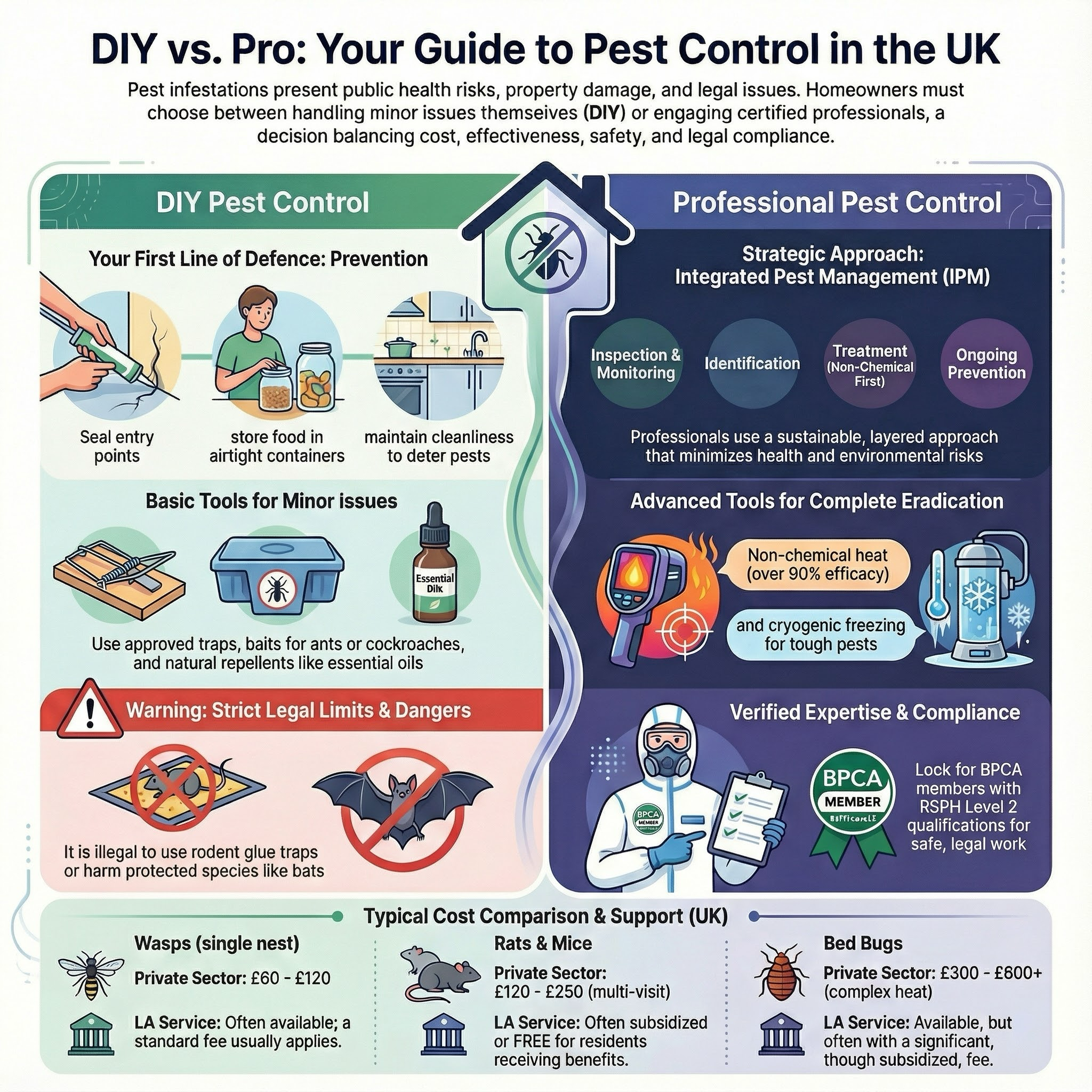
BPCA (British Pest Control Association) registration means trained, certified and insured. Anyone using poisons or traps without BPCA training is risky.
Multi-visit treatments (rats, fleas, woodworm) need a documented plan: what's applied, where, when to expect results, when to re-treat.
Killing pests without sealing entry just creates a vacancy. Insist on proofing (block holes, gaps, vents) as part of the treatment — not an extra.
Tell the controller about pets and small children before they treat. Some chemicals require evacuation hours; some are pet-safe alternatives.
Indicative UK ranges and what affects price.
By job type
Quote spread is typically ± 18% — always get 3 quotes.
Pest Control quick-view
Pest Control explained
Removing a bird's nest from a UK chimney typically costs £100–£300, depending on access, timing, and whether the nest is causing a downdraft, smoke problem, or just nuisance noise. The job involves rod cleaning from the chimney top or bottom, sometimes camera inspection, and safe disposal.
The legal context is critical: under the Wildlife and Countryside Act 1981, it's illegal to disturb active nests with eggs or chicks during breeding season (typically March-August in the UK). Outside breeding season, nest removal is legal and advisable to prevent fire hazards and downdraft.
| Service | Typical price |
|---|---|
| Chimney sweep + nest removal | £100–£250 |
| Chimney inspection (camera survey) | £90–£200 |
| Cap / cowl fitting (post-removal) | £150–£400 |
| Removal of large / multi-year nest | £200–£500 |
| Removal + cap + sweep | £250–£600 |
| Pest control specialist (jackdaws, bats, birds of conservation concern) | £200–£600 |
UK wildlife law (Wildlife and Countryside Act 1981, Section 1) makes it illegal to:
For most birds: nesting season is approximately March to August. During this window, nest removal is illegal even if the birds are causing problems. Wait until autumn for removal.
Outside breeding season (typically September to February in the UK). Inside breeding season, only if the nest is unoccupied and confirmed not in use; even then, exercise caution and document carefully.
Fit a chimney cap or cowl after the nest is removed. Stainless steel mesh cowls allow draft while preventing nesting. £150-£400 fitted; lasts 15-25 years.
All UK bat species are legally protected. Stop any work and call the Bat Conservation Trust helpline (0345 1300 228) for guidance. Removal requires a Natural England licence and specialist consultant input.
Annual minimum for any chimney in regular use. Smokeless fuel: annual. House coal: every 6 months. Wood: every 6 months for heavy use, annual for light use. Additional sweep before winter use is wise.
Chimney sweeps clean chimneys and remove typical bird nests. Pest control specialists handle protected species, large infestations, or wildlife that needs licensed treatment (bats, certain birds in nesting season).
Possible for accessible chimneys with simple bird nests, outside breeding season. Risks include falls, collapsed nest material, flue damage, and accidentally disturbing protected species. Most homeowners hire a sweep — £100-£250 is good value.
Want a local pro to handle this? A HETAS-registered chimney sweep handles routine nest removal and recommends appropriate caps. For protected species or unusual situations, a wildlife-aware pest control specialist or the Bat Conservation Trust.
This guide was written with AI assistance and is intended for general information only. Prices are estimates based on UK averages and may vary by region. Always get at least three quotes and consult a qualified professional before starting any work.
Ask follow-ups in plain English. The AI explains options, sequencing and what to ask the pest control — so you walk in informed.
Discovering a rat problem in your UK home is more than just an unpleasant surprise; it is a genuine risk to your property’s integrity and your family’s health. ...
READ GUIDE →GuideA fly infestation in a UK home is more than just a seasonal nuisance; it is a significant hygiene risk. Flies are known carriers of bacteria such as Salmonella ...
READ GUIDE →GuideDiscovering signs of rats in your home is more than just a nuisance; it is a significant health and safety risk. Rats can gnaw through electrical cables, damage...
READ GUIDE →GuideGrey squirrels are more than just a garden nuisance; they are a significant threat to the structural integrity and safety of UK homes. Once they gain access to ...
READ GUIDE →GuideDomestic Pest and Vermin Control Guide Scope of Works Inspect lofts, sub‑floors, kitchens and exterior for signs, entry points and species identification . Prod...
READ GUIDE →GuideFinding maggots in your home is a distressing experience for any UK homeowner. These larvae, typically from houseflies or blowflies, are not just unsightly; the...
READ GUIDE →