Instant
01 · Ask
Ask the AI a follow-up
Got more questions about fruit fly control? Describe the bit you're unsure about — the AI explains options, sequencing and what to ask the pest control.

Kitchen fruit fly outbreak — source identified, treated and entry points sealed.
You've read the brief on fruit fly control. Now lean on us to find the right pest control — and stay in control of the job.
Got more questions about fruit fly control? Describe the bit you're unsure about — the AI explains options, sequencing and what to ask the pest control.
Costs, timelines, pitfalls and the right questions to ask before any pest control starts on fruit fly control.
Itemised quotes from up to 3 local pest controls on fruit fly control — so you can compare like-for-like, not lump sums.
Ready when you are
Enter your postcode and get free quotes from local pros.
Four moves that separate a smooth job from a nightmare.
Spraying adult flies with fly spray is useless if the larvae are still thriving in a dirty drain or behind a kickplate.
Homeowners often confuse fruit flies with fungus gnats (from overwatered plants) or phorid flies (from sewage leaks). Each requires a different treatment.
If a bowl of overripe bananas is left out the day after treatment, a new infestation can start immediately from outside.
If a pest controller cannot access the primary drain or grease trap, the treatment is likely to fail.
Indicative UK ranges and what affects price.
By job type
Quote spread is typically ± 18% — always get 3 quotes.
Pest Control quick-view
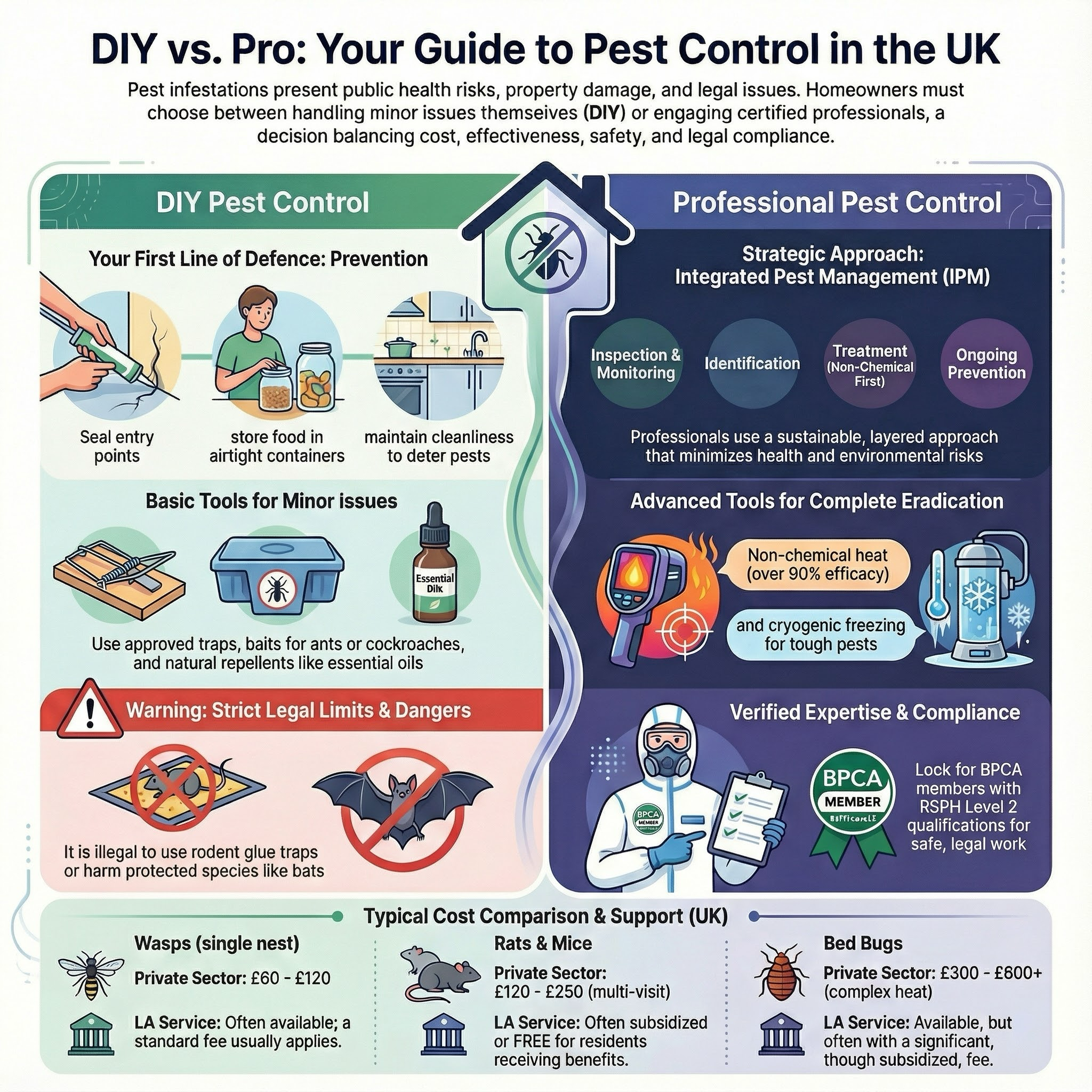
Pest Control explained
While they don't bite, fruit flies frequently move between decaying organic matter and fresh food surfaces, spreading bacteria like Salmonella, E. coli, and Listeria. Professional intervention is often necessary when a small kitchen nuisance turns into a persistent infestation that DIY traps can no longer contain.
| Item | Low £ | High £ | Notes |
|---|---|---|---|
| Initial Inspection & Call-out | £80 | £120 | Covers travel and first 45 mins of site survey. |
| Standard Treatment (Small Kitchen) | £150 | £250 | Includes materials and basic drain treatment. |
| Complex/Large Property Treatment | £300 | £500 | Required for multi-room issues or commercial-sized kitchens. |
| Follow-up Visit | £60 | £100 | Secondary inspection 10–14 days later. |
| Total Estimated Project Cost | £170 | £450 | Most domestic jobs fall within this range. |
Prices vary based on your location (London and the South East typically command higher rates) and the complexity of the drainage system. If the infestation has spread to communal areas in a block of flats, costs may increase due to the additional area requiring treatment.
Small numbers of fruit flies can often be managed with strict hygiene and "apple cider vinegar" traps. However, if the flies persist despite your best efforts, it usually indicates a hidden breeding site—such as a cracked pipe or a buildup of organic matter under floorboards—that requires professional equipment to reach.
Professional pest controllers have access to professional-use-only insecticides and microbial foams that are significantly more effective than supermarket aerosols.
Fruit flies thrive in the warmth of centrally heated UK homes. They often enter the house on grocery store produce or breed in the warm, moist environment of your kitchen drains and bin cupboards year-round.
Yes, provided you follow the technician's instructions. Most treatments require you to keep pets out of the room for 2–4 hours while sprays dry. Fish tanks must be covered and pumps turned off, as many insecticides are toxic to aquatic life.
Fruit flies are usually tan or brownish with red eyes and hover near food or bins. Fungus gnats are black, look like tiny mosquitoes, and are usually found crawling on the soil of houseplants.
Any "open" fruit or vegetables that have been exposed to the flies should be discarded. Sealed tins and packets are fine, but you should wipe down the exterior of any containers that were in the vicinity of the infestation.
This is a common myth. While it may kill a few larvae, it rarely reaches the entire "biofilm" coating the pipes. Professional microbial cleaners are required to actually dissolve the organic matter they feed on.
This guide was written with AI assistance and is intended for general information only. Prices are estimates based on UK averages and may vary by region. Always get at least three quotes and consult a qualified professional before starting any work.
Ask follow-ups in plain English. The AI explains options, sequencing and what to ask the pest control — so you walk in informed.
Discovering a rat problem in your UK home is more than just an unpleasant surprise; it is a genuine risk to your property’s integrity and your family’s health. ...
READ GUIDE →GuideA fly infestation in a UK home is more than just a seasonal nuisance; it is a significant hygiene risk. Flies are known carriers of bacteria such as Salmonella ...
READ GUIDE →GuideDiscovering signs of rats in your home is more than just a nuisance; it is a significant health and safety risk. Rats can gnaw through electrical cables, damage...
READ GUIDE →GuideGrey squirrels are more than just a garden nuisance; they are a significant threat to the structural integrity and safety of UK homes. Once they gain access to ...
READ GUIDE →GuideDomestic Pest and Vermin Control Guide Scope of Works Inspect lofts, sub‑floors, kitchens and exterior for signs, entry points and species identification . Prod...
READ GUIDE →GuideFinding maggots in your home is a distressing experience for any UK homeowner. These larvae, typically from houseflies or blowflies, are not just unsightly; the...
READ GUIDE →