Instant
01 · Ask
Ask the AI a follow-up
Got more questions about maggot waste removal? Describe the bit you're unsure about — the AI explains options, sequencing and what to ask the pest control.

Dead animal or food source causing maggot infestation — removed, area cleaned and chemically treated.
You've read the brief on maggot waste removal. Now lean on us to find the right pest control — and stay in control of the job.
Got more questions about maggot waste removal? Describe the bit you're unsure about — the AI explains options, sequencing and what to ask the pest control.
Costs, timelines, pitfalls and the right questions to ask before any pest control starts on maggot waste removal.
Itemised quotes from up to 3 local pest controls on maggot waste removal — so you can compare like-for-like, not lump sums.
Ready when you are
Enter your postcode and get free quotes from local pros.
Four moves that separate a smooth job from a nightmare.
Killing the maggots but leaving a dead rat in the wall will result in a second wave of flies within days.
Standard household air fresheners cannot mask the smell of organic decay; industrial enzyme cleaners are required.
DIY attempts often spread larvae or bacteria to "clean" areas of the house via footwear or cleaning tools.
Using bleach on certain porous surfaces can damage your home without actually killing the fly eggs.
Indicative UK ranges and what affects price.
By job type
Quote spread is typically ± 18% — always get 3 quotes.
Pest Control quick-view
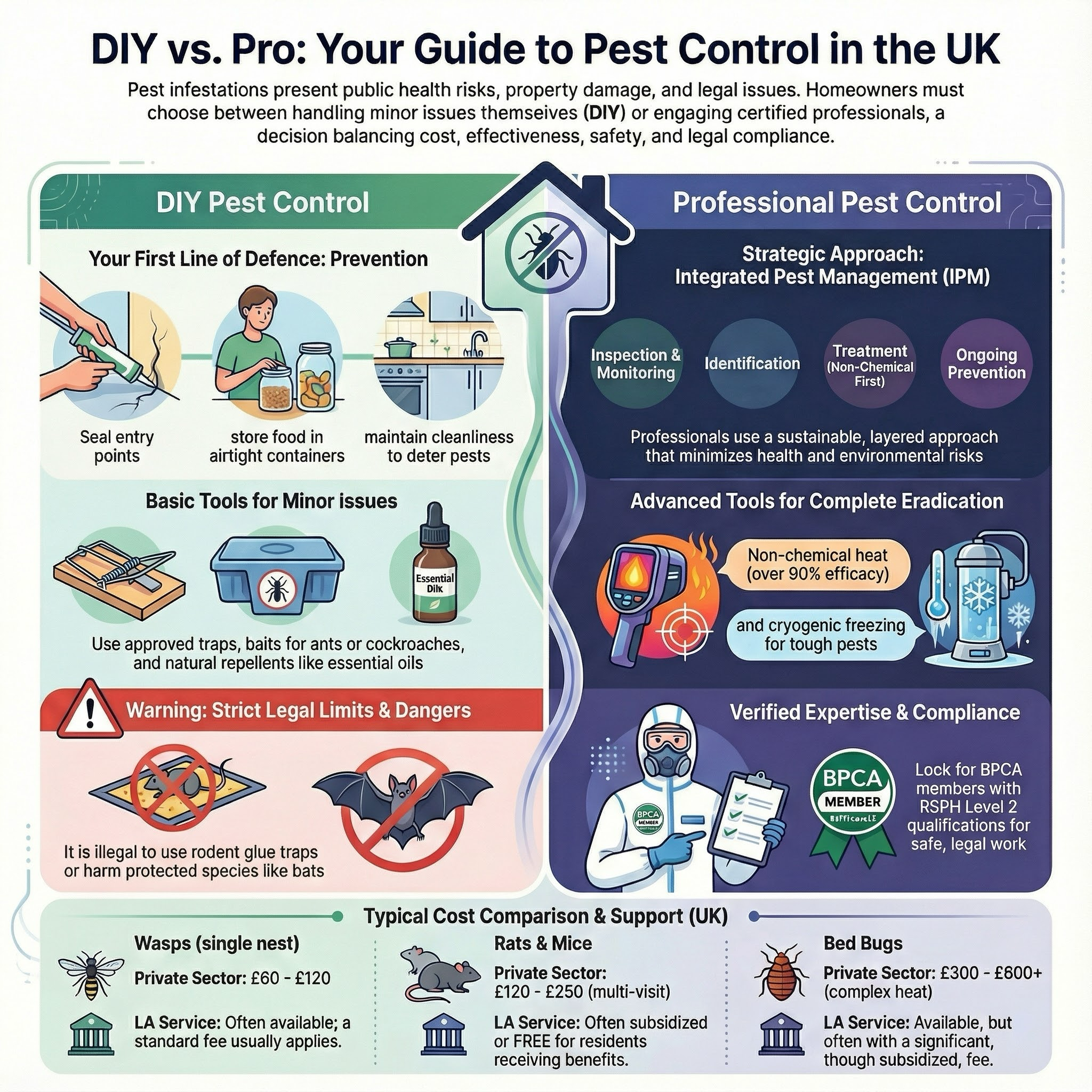
Pest Control explained
Professional maggot waste removal ensures the infestation is eliminated at the source and the area is biologically decontaminated. This guide covers the costs, processes, and regulations involved in restoring your home to a safe, sanitary condition.
The cost of maggot removal depends largely on the "biohazard" level and the accessibility of the source. Prices in 2025/26 reflect the specialised PPE (Personal Protective Equipment) and disposal fees required for hazardous waste.
| Item | Low £ | High £ | Notes |
|---|---|---|---|
| Call-out / Initial Assessment | £85 | £150 | Includes first hour and PPE setup. |
| Labour (per hour) | £50 | £95 | Specialist rates for biohazard work. |
| Materials & Biocides | £30 | £130 | Includes industrial cleaners and sealants. |
| Hazardous Waste Disposal | £50 | £200 | Licensed disposal of contaminated items. |
| Deodorising Fogging | £70 | £180 | Optional but recommended for heavy smells. |
| Average Total Project | £235 | £755 | Standard domestic clearance. |
Prices vary based on your location in the UK, with London and the South East typically seeing a 15-20% premium. If the infestation has spread into floorboards or wall cavities, structural repairs will add to the final bill.
While you can tackle a few maggots in an outdoor wheelie bin with boiling water and bleach, indoor infestations usually require professional help. Maggots carry bacteria like Salmonella and E. coli, and the source of the infestation is often a biohazard in itself.
Professional pest controllers have access to high-concentration biocides and ULV (Ultra-Low Volume) foggers that are not available to the general public.
If the infestation involves a dead animal or human waste, you must hire a professional. They are trained in COSHH (Control of Substances Hazardous to Health) regulations and hold the necessary waste carrier licences to dispose of the waste legally.
Yes. Maggots are the larvae of flies, which feed on decaying matter and faeces. They can spread bacteria such as Salmonella and E. coli onto food preparation surfaces and utensils.
Maggots can crawl into the pile of a carpet or underneath the edges if there is a food source or moisture present. Professional steam cleaning or insecticidal treatment is usually required to clear them from fabrics.
In the UK, the most common causes are overflowing kitchen bins during summer, a dead rodent under the floorboards, or a bird that has died in the chimney.
A professional will use an ozone generator or a ULV fogger. These machines break down the odour molecules rather than just masking them with a scent.
Usually, you only need to vacate the specific room being treated. However, if industrial fogging is used, you and your pets may need to leave the property for 2–4 hours while the treatment settles.
Most standard policies do not cover pest infestations or cleaning. However, if the maggots are the result of a "sudden and accidental" event, like a burst pipe causing rot, you may have a claim for the underlying damage.
This guide was written with AI assistance and is intended for general information only. Prices are estimates based on UK averages and may vary by region. Always get at least three quotes and consult a qualified professional before starting any work.
Ask follow-ups in plain English. The AI explains options, sequencing and what to ask the pest control — so you walk in informed.
Discovering a rat problem in your UK home is more than just an unpleasant surprise; it is a genuine risk to your property’s integrity and your family’s health. ...
READ GUIDE →GuideA fly infestation in a UK home is more than just a seasonal nuisance; it is a significant hygiene risk. Flies are known carriers of bacteria such as Salmonella ...
READ GUIDE →GuideDiscovering signs of rats in your home is more than just a nuisance; it is a significant health and safety risk. Rats can gnaw through electrical cables, damage...
READ GUIDE →GuideGrey squirrels are more than just a garden nuisance; they are a significant threat to the structural integrity and safety of UK homes. Once they gain access to ...
READ GUIDE →GuideDomestic Pest and Vermin Control Guide Scope of Works Inspect lofts, sub‑floors, kitchens and exterior for signs, entry points and species identification . Prod...
READ GUIDE →GuideFinding maggots in your home is a distressing experience for any UK homeowner. These larvae, typically from houseflies or blowflies, are not just unsightly; the...
READ GUIDE →