Instant
01 · Ask
Ask the AI a follow-up
Got more questions about mice removal? Describe the bit you're unsure about — the AI explains options, sequencing and what to ask the pest control.

Mouse infestation — bait stations, traps and entry-point sealing. Often multi-visit for full eradication.
You've read the brief on mice removal. Now lean on us to find the right pest control — and stay in control of the job.
Got more questions about mice removal? Describe the bit you're unsure about — the AI explains options, sequencing and what to ask the pest control.
Costs, timelines, pitfalls and the right questions to ask before any pest control starts on mice removal.
Itemised quotes from up to 3 local pest controls on mice removal — so you can compare like-for-like, not lump sums.
Ready when you are
Enter your postcode and get free quotes from local pros.
Four moves that separate a smooth job from a nightmare.
The most common reason for "failed" treatments is leaving a gap larger than 5mm (the width of a pencil), which is all a mouse needs to re-enter.
Using "loose" bait rather than secured blocks can lead to mice moving the poison into areas where pets or children can find it.
Treating the house but ignoring a nearby bird feeder or compost heap that provides a constant food source for the colony.
If a mouse dies under floorboards after consuming bait, it can cause a significant smell for 1-2 weeks.
Indicative UK ranges and what affects price.
By job type
Quote spread is typically ± 18% — always get 3 quotes.
Pest Control quick-view
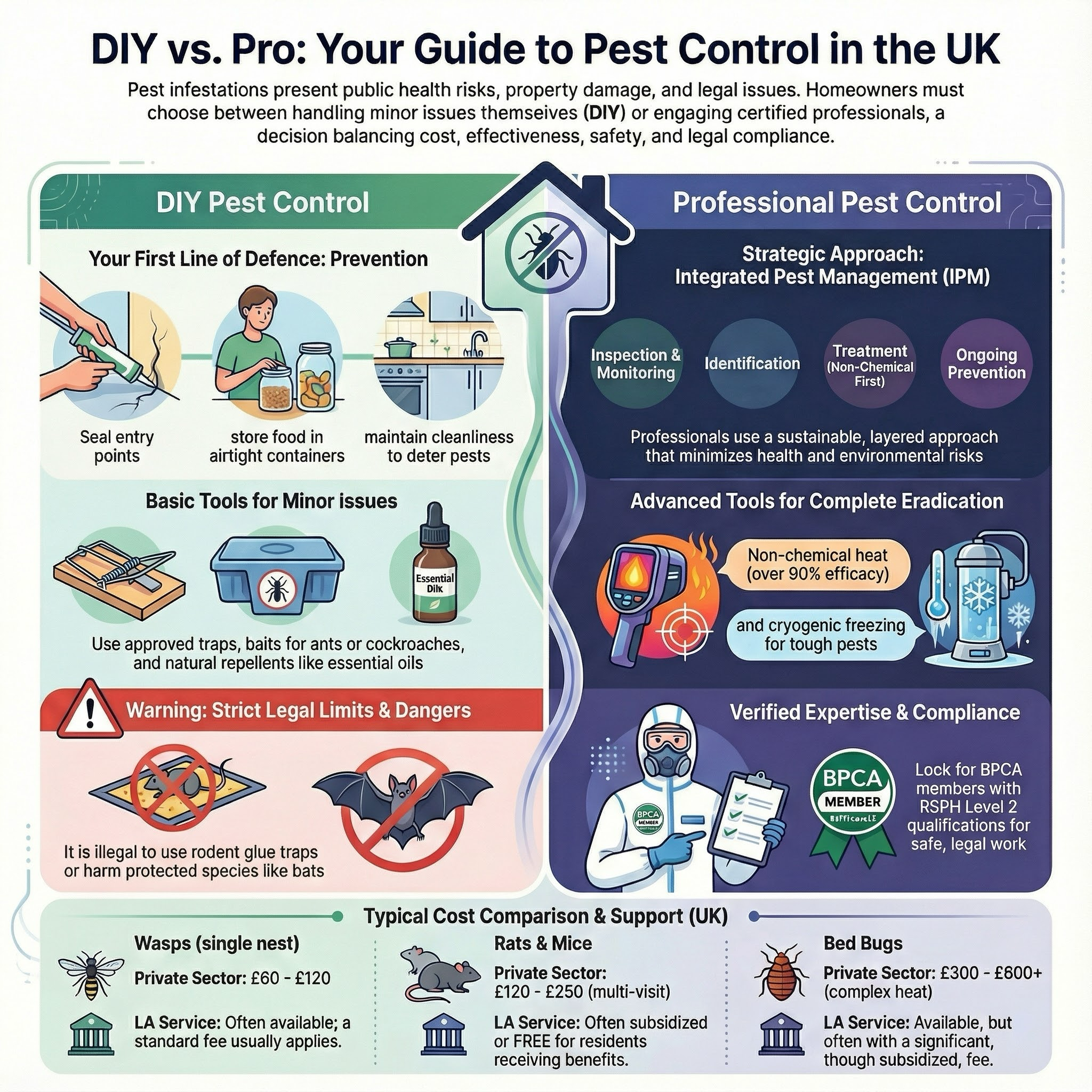
Pest Control explained
Professional mice removal is not just about laying traps; it is a comprehensive process of eradication, sanitation, and "proofing" to ensure the rodents cannot return. This guide covers everything you need to know about the process, costs, and regulations involved in clearing an infestation in 2025.
The cost of mice removal in the UK depends heavily on the size of your property and the severity of the infestation. Most professional pest controllers offer a "treatment block" which includes an initial survey and two follow-up visits.
| Item | Low £ | High £ | Notes |
|---|---|---|---|
| Initial Survey / Call-out | £90 | £150 | Often deducted from the total if work proceeds. |
| Standard Treatment (3 Visits) | £180 | £350 | Includes professional baiting and monitoring. | £60 | £150 | Sealing air bricks and small pipe gaps. |
| Full Property Proofing | £300 | £800+ | Extensive work for older or detached homes. |
| Loft Decontamination | £250 | £600 | Includes removal of soiled insulation and biocide treatment. |
Prices are generally higher in London and the South East. Factors that increase the price include the ease of access to crawl spaces and whether the infestation has spread into the fabric of the building.
While many homeowners attempt DIY trapping, it often fails because it doesn't address the root cause: the entry points. Professionals have access to high-concentration rodenticides that are not available to the general public due to UK environmental regulations.
Safety Warning: Improper use of rodenticides can lead to secondary poisoning of pets and local wildlife like owls and hedgehogs.
If you have a persistent problem or mice are in your kitchen or loft, a professional is required to ensure the job is done safely and legally. They will also provide a guarantee that the infestation is fully cleared.
Pest control is an unregulated industry in terms of who can pick up a trap, so it is vital to check for specific credentials to ensure safety and efficacy.
Pest control in the UK is governed by several strict laws to protect the environment and non-target species.
Modern professional baits are designed to dehydrate the rodent, which often reduces the odour. However, there is always a small risk of a mouse dying in an inaccessible void; professionals can use odour-neutralising bags to mitigate this if it occurs.
Professionals use lockable, tamper-resistant bait stations that keep the poison away from pets. They will also use "bittering agents" in the bait to discourage non-target animals from eating it.
A "clear" status is usually confirmed when bait consumption stops and no new droppings are found during the follow-up inspection. Your technician may also use non-toxic tracking dust to check for footprints.
There is very little scientific evidence that these methods work for established infestations. Mice are highly adaptable and will quickly ignore smells or sounds if there is a food source nearby.
No, standard baiting and trapping do not require you to vacate. If the technician needs to use a ULV (Ultra Low Volume) fogging treatment for mites or sanitation, you may need to leave for 2-4 hours.
This guide was written with AI assistance and is intended for general information only. Prices are estimates based on UK averages and may vary by region. Always get at least three quotes and consult a qualified professional before starting any work.
Ask follow-ups in plain English. The AI explains options, sequencing and what to ask the pest control — so you walk in informed.
Discovering a rat problem in your UK home is more than just an unpleasant surprise; it is a genuine risk to your property’s integrity and your family’s health. ...
READ GUIDE →GuideA fly infestation in a UK home is more than just a seasonal nuisance; it is a significant hygiene risk. Flies are known carriers of bacteria such as Salmonella ...
READ GUIDE →GuideDiscovering signs of rats in your home is more than just a nuisance; it is a significant health and safety risk. Rats can gnaw through electrical cables, damage...
READ GUIDE →GuideGrey squirrels are more than just a garden nuisance; they are a significant threat to the structural integrity and safety of UK homes. Once they gain access to ...
READ GUIDE →GuideDomestic Pest and Vermin Control Guide Scope of Works Inspect lofts, sub‑floors, kitchens and exterior for signs, entry points and species identification . Prod...
READ GUIDE →GuideFinding maggots in your home is a distressing experience for any UK homeowner. These larvae, typically from houseflies or blowflies, are not just unsightly; the...
READ GUIDE →