Instant
01 · Ask
Ask the AI a follow-up
Got more questions about mouse removal? Describe the bit you're unsure about — the AI explains options, sequencing and what to ask the pest control.

Property cleared of mice — bait, traps, sealing and follow-up. Most properties cleared in 2-3 visits.
You've read the brief on mouse removal. Now lean on us to find the right pest control — and stay in control of the job.
Got more questions about mouse removal? Describe the bit you're unsure about — the AI explains options, sequencing and what to ask the pest control.
Costs, timelines, pitfalls and the right questions to ask before any pest control starts on mouse removal.
Itemised quotes from up to 3 local pest controls on mouse removal — so you can compare like-for-like, not lump sums.
Ready when you are
Enter your postcode and get free quotes from local pros.
Four moves that separate a smooth job from a nightmare.
Killing mice without sealing entry points (proofing) ensures they will return within weeks.
Poorly placed bait can be eaten by pets or local wildlife; always use tamper-proof stations.
Failing to remove food sources like spilled birdseed or unsealed cereal boxes makes baiting much less effective.
Stopping after seeing one dead mouse often leaves the rest of the nest to multiply.
Indicative UK ranges and what affects price.
By job type
Quote spread is typically ± 18% — always get 3 quotes.
Pest Control quick-view
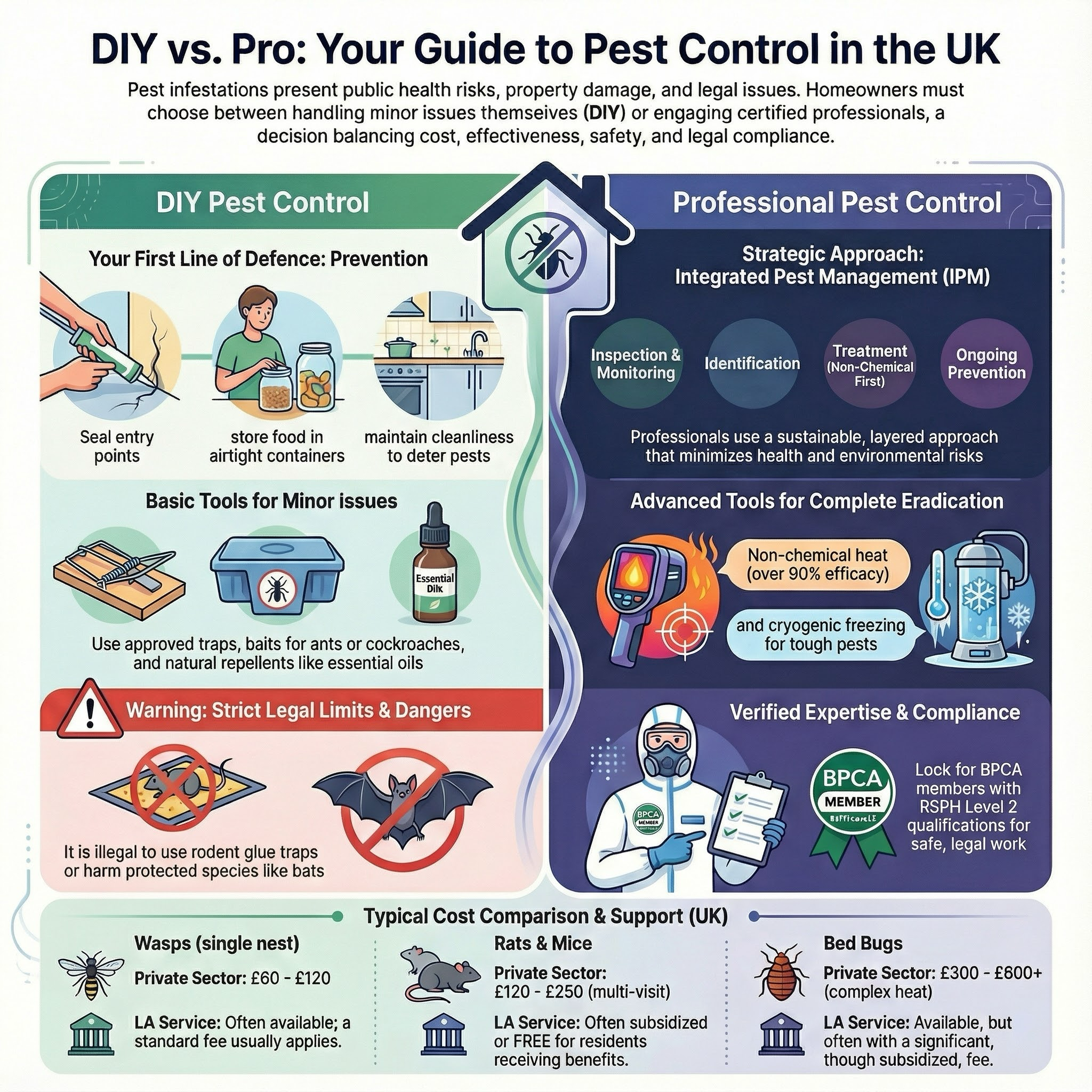
Pest Control explained
Professional mouse removal ensures the infestation is handled humanely and effectively, preventing a few stray rodents from becoming a full-scale colony. Prompt action is essential to protect your property’s value and your family's health.
| Item | Low £ | High £ | Notes |
|---|---|---|---|
| Initial Call-out & Survey | £80 | £150 | Covers the first hour and diagnosis. |
| Standard 3-Visit Treatment | £180 | £350 | Includes setup, check-up, and removal. |
| Labour (Proofing Work) | £45 | £75 | Per hour for sealing holes and gaps. |
| Materials & Bait | £20 | £80 | Traps, professional rodenticide, and mesh. |
| Total Project Cost | £200 | £450 | Average for a standard 3-bed semi-detached. |
Prices vary based on the severity of the infestation and the size of the property. Most professional pest controllers offer a fixed-price package for three visits, which is typically the minimum required to ensure a colony is fully eradicated.
While DIY traps can catch an individual mouse, they rarely solve a colony issue. Professional pest controllers have access to high-concentration rodenticides and tracking dusts that are not available to the general public.
Professional intervention is highly recommended if you hear scratching in the walls or find droppings in multiple rooms, as this indicates an established nest.
Mouse droppings are small (the size of a grain of rice) and pointed, whereas rat droppings are much larger and blunt. Mice are also more likely to nest inside cupboards or lofts, while rats often live in sewers or under floorboards.
Professionals use lockable, tamper-resistant bait stations that keep pets away from the poison. However, you should always inform your technician about pets so they can choose the safest placement and formulation.
Yes, mice are excellent climbers and can scale rough vertical surfaces like brickwork or ivy. They only need a gap the width of a pencil (approx. 6mm) to enter your home.
There is no scientific evidence that these methods work for long-term control. Mice are highly adaptable and will quickly become accustomed to smells or sounds if there is a warm nest and food available.
No, mouse treatments do not usually require you to vacate the property. The technician will place bait or traps in discreet locations, such as behind kitchen units or in the loft, allowing you to go about your day as usual.
This guide was written with AI assistance and is intended for general information only. Prices are estimates based on UK averages and may vary by region. Always get at least three quotes and consult a qualified professional before starting any work.
Ask follow-ups in plain English. The AI explains options, sequencing and what to ask the pest control — so you walk in informed.
Discovering a rat problem in your UK home is more than just an unpleasant surprise; it is a genuine risk to your property’s integrity and your family’s health. ...
READ GUIDE →GuideA fly infestation in a UK home is more than just a seasonal nuisance; it is a significant hygiene risk. Flies are known carriers of bacteria such as Salmonella ...
READ GUIDE →GuideDiscovering signs of rats in your home is more than just a nuisance; it is a significant health and safety risk. Rats can gnaw through electrical cables, damage...
READ GUIDE →GuideGrey squirrels are more than just a garden nuisance; they are a significant threat to the structural integrity and safety of UK homes. Once they gain access to ...
READ GUIDE →GuideDomestic Pest and Vermin Control Guide Scope of Works Inspect lofts, sub‑floors, kitchens and exterior for signs, entry points and species identification . Prod...
READ GUIDE →GuideFinding maggots in your home is a distressing experience for any UK homeowner. These larvae, typically from houseflies or blowflies, are not just unsightly; the...
READ GUIDE →