Instant
01 · Ask
Ask the AI a follow-up
Got more questions about pest Fumigation Cost? Describe the bit you're unsure about — the AI explains options, sequencing and what to ask the pest control.

What fumigation costs in 2026 — by pest, area and treatment method (chemical or heat).
You've read the brief on pest Fumigation Cost. Now lean on us to find the right pest control — and stay in control of the job.
Got more questions about pest Fumigation Cost? Describe the bit you're unsure about — the AI explains options, sequencing and what to ask the pest control.
Costs, timelines, pitfalls and the right questions to ask before any pest control starts on pest Fumigation Cost.
Itemised quotes from up to 3 local pest controls on pest Fumigation Cost — so you can compare like-for-like, not lump sums.
Ready when you are
Enter your postcode and get free quotes from local pros.
Four moves that separate a smooth job from a nightmare.
If the property isn't airtight, the gas concentration drops, leading to a "knockdown" rather than a "kill," allowing the infestation to return.
Entering the property before the technician has cleared it can lead to respiratory distress or chemical sensitivity.
Failing to wash fabrics or clear clutter before treatment can provide "shadows" where pests can survive the gas.
For pests like bed bugs, a single fumigation might miss eggs; always ask if a secondary growth regulator is being used.
Indicative UK ranges and what affects price.
By job type
Quote spread is typically ± 18% — always get 3 quotes.
Pest Control quick-view
Pest Control explained
Fumigation involves the use of gaseous pesticides (fumigants) or specialised "fogging" to penetrate every crack, crevice, and fabric in your home. It is considered the "gold standard" for pests that are difficult to reach through traditional methods, offering a clean slate for your property.
The cost of fumigation in the UK varies significantly based on the type of pest, the size of the property, and the specific chemicals required. Most professional companies include a follow-up visit in their primary quote to ensure the treatment was successful.
| Item | Low £ | High £ | Notes |
|---|---|---|---|
| Initial Inspection/Call-out | £80 | £150 | Often deducted from the final bill if you proceed. |
| Single Room Fogging | £150 | £300 | Ideal for localised bed bug or flea issues. |
| 3-Bed Semi-Detached (Full House) | £600 | £1,200 | Comprehensive treatment for severe infestations. |
| Woodworm Fumigation (Per Floor) | £400 | £900 | Specialised gas treatment for structural timber. |
| Commercial/Large Detached | £1,500 | £3,000+ | Complex jobs requiring extensive sealing. |
Factors that will increase your quote include the severity of the infestation, the geographical location (London and the South East typically command higher rates), and the ease of access to voids or loft spaces.
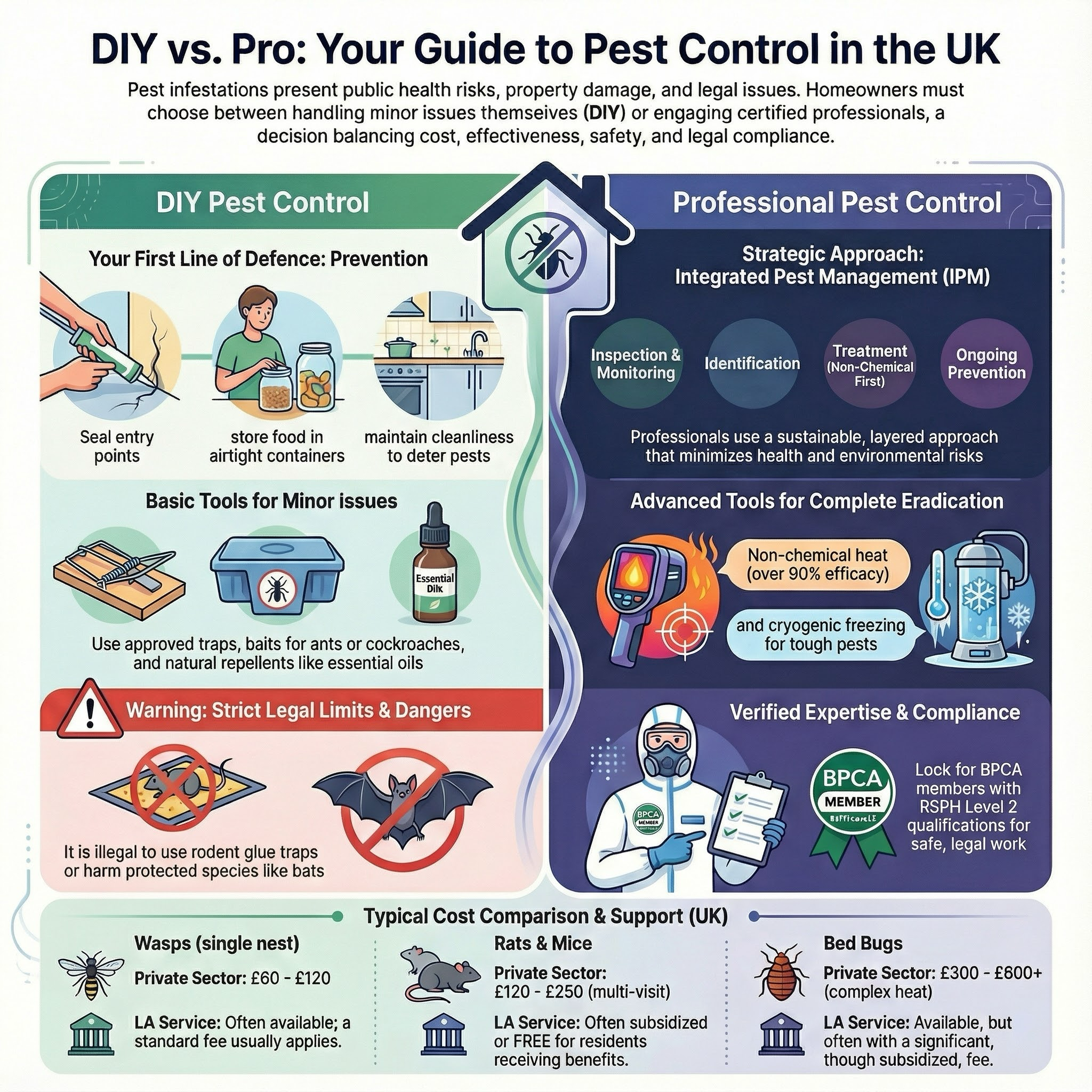
Fumigation is strictly a professional-only task. While "smoke bombs" are available in DIY stores, these are significantly less potent than professional-grade biocides and rarely reach the deep harbourage points where pests hide. Professional fumigants are regulated under the Control of Pesticides Regulations (COPR) and can be lethal if mishandled.
Note: Attempting to use professional-grade chemicals without a licence is not only dangerous but may invalidate your home insurance if property damage occurs.
Pest control is an unregulated industry in some respects, so it is vital to vet your contractor thoroughly to ensure safety and efficacy.
Professional pest controllers must adhere to several strict UK standards to ensure public safety and environmental protection.
Yes, provided they are removed during the treatment. Fish tanks are particularly vulnerable and should be removed or hermetically sealed with their own air supply. You must wait for the technician’s "all clear" before bringing pets back in.
In most cases, no. Modern fumigants and ULV fogs do not leave a sticky residue on clothing. However, if you have a severe bed bug infestation, washing clothes at 60°C is often recommended as part of the preparation process.
Professional fumigant gases (like Carbon Dioxide or Phosphine) and ULV fogs are non-corrosive and dry. They should not damage TVs, computers, or delicate upholstery, though sensitive equipment can be covered with plastic as a precaution.
For standard fogging, 4 to 6 hours is typical. For full structural fumigation using gas, you may need to stay in a hotel for 24 to 48 hours to ensure the gas has completely dissipated.
Some true fumigants are ovicidal (kill eggs), but many standard "fogging" treatments are not. Your technician will often use an IGR (Insect Growth Regulator) alongside the treatment to prevent any surviving larvae from reaching maturity.
This guide was written with AI assistance and is intended for general information only. Prices are estimates based on UK averages and may vary by region. Always get at least three quotes and consult a qualified professional before starting any work.
Ask follow-ups in plain English. The AI explains options, sequencing and what to ask the pest control — so you walk in informed.
Discovering a rat problem in your UK home is more than just an unpleasant surprise; it is a genuine risk to your property’s integrity and your family’s health. ...
READ GUIDE →GuideA fly infestation in a UK home is more than just a seasonal nuisance; it is a significant hygiene risk. Flies are known carriers of bacteria such as Salmonella ...
READ GUIDE →GuideDiscovering signs of rats in your home is more than just a nuisance; it is a significant health and safety risk. Rats can gnaw through electrical cables, damage...
READ GUIDE →GuideGrey squirrels are more than just a garden nuisance; they are a significant threat to the structural integrity and safety of UK homes. Once they gain access to ...
READ GUIDE →GuideDomestic Pest and Vermin Control Guide Scope of Works Inspect lofts, sub‑floors, kitchens and exterior for signs, entry points and species identification . Prod...
READ GUIDE →GuideFinding maggots in your home is a distressing experience for any UK homeowner. These larvae, typically from houseflies or blowflies, are not just unsightly; the...
READ GUIDE →