Instant
01 · Ask
Ask the AI a follow-up
Got more questions about rat control? Describe the bit you're unsure about — the AI explains options, sequencing and what to ask the pest control.

Rat treatment — bait stations, traps, entry-point sealing. Includes 2-3 follow-up visits.
You've read the brief on rat control. Now lean on us to find the right pest control — and stay in control of the job.
Got more questions about rat control? Describe the bit you're unsure about — the AI explains options, sequencing and what to ask the pest control.
Costs, timelines, pitfalls and the right questions to ask before any pest control starts on rat control.
Itemised quotes from up to 3 local pest controls on rat control — so you can compare like-for-like, not lump sums.
Ready when you are
Enter your postcode and get free quotes from local pros.
Four moves that separate a smooth job from a nightmare.
Killing the rats currently in your loft is useless if the hole in the sewer pipe remains open for the next family to move in.
Using expanding foam to seal holes is ineffective; rats can chew through it in seconds. Use steel wool or stainless steel mesh.
In terraced or semi-detached UK homes, rats often travel through shared loft spaces or floor voids. If your neighbour doesn't treat their side, the rats will return.
Leaving dog food out or overfilling bird feeders provides a "high-competition" food source that makes rats ignore the technician's bait.
Indicative UK ranges and what affects price.
By job type
Quote spread is typically ± 18% — always get 3 quotes.
Pest Control quick-view
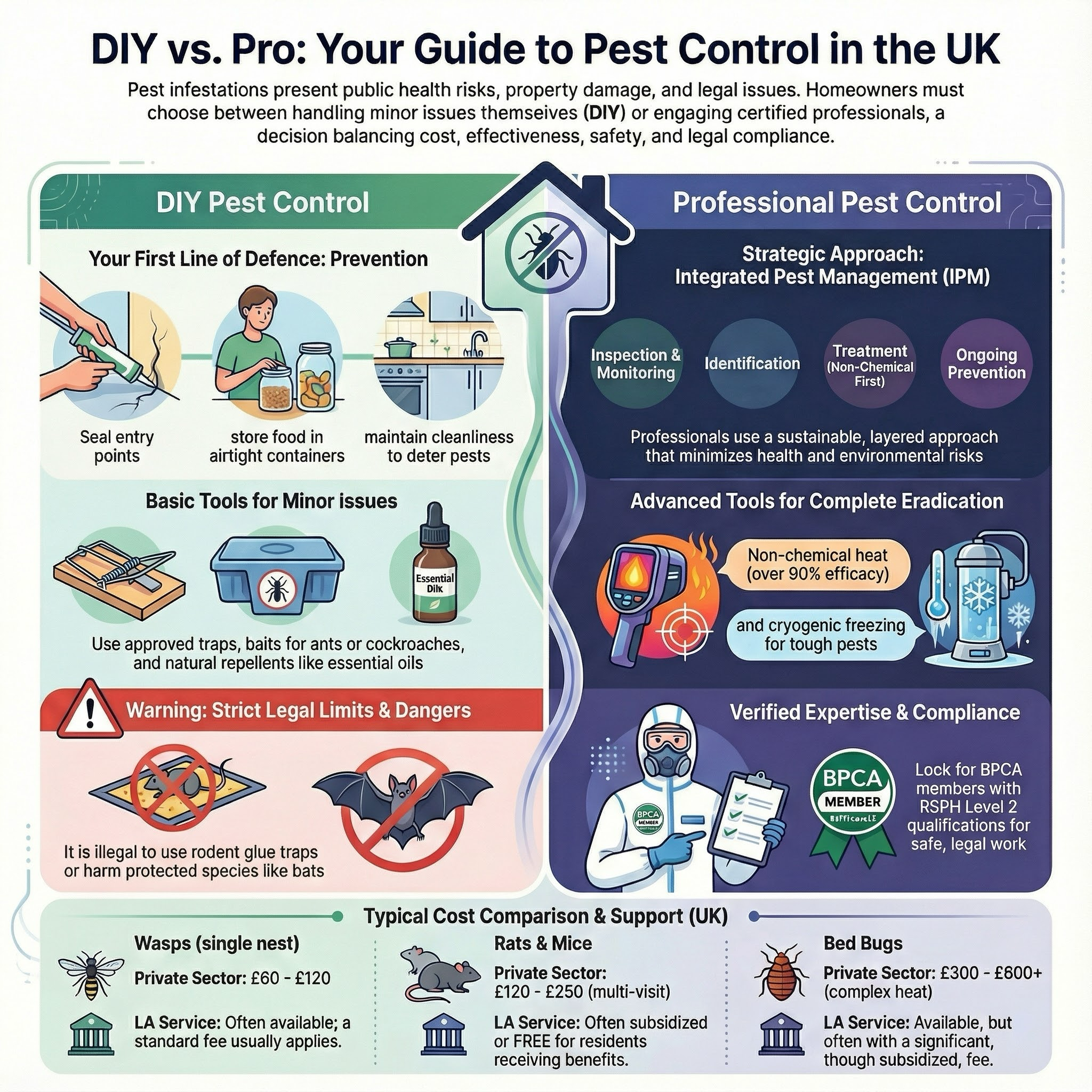
Pest Control explained
Professional rat control focuses on a three-stage approach: identification, eradication, and proofing. This guide outlines what to expect when hiring a UK pest control technician and the realistic costs involved in clearing an infestation for good.
Most professional pest controllers offer a "treatment programme" rather than a one-off visit, as a single visit is rarely enough to eliminate a colony. Prices below include VAT and reflect current 2025/26 UK averages.
| Item | Low £ | High £ | Notes |
|---|---|---|---|
| Standard 3-Visit Plan | £180 | £350 | Includes survey, baiting, and two follow-ups. |
| Emergency Call-out | £90 | £160 | Same-day response, usually for rats inside living areas. |
| CCTV Drain Survey | £150 | £280 | To identify structural defects in sewer pipes. |
| Minor Proofing Work | £60 | £200 | Mesh vents, sealing small holes, and door brushes. |
| Rat Blocker (Drain Valve) | £180 | £300 | One-way stainless steel valve fitted to the sewer pipe. |
Costs vary based on the severity of the infestation and your location. London and the South East typically see prices 20-30% higher than the national average due to increased demand and overheads.
While DIY bait is available in hardware stores, it is often less potent than professional-grade rodenticides. Rats are "neophobic" (wary of new things), and poorly placed traps often fail, leading to bait shyness which makes the problem harder for a pro to fix later.
Expert Tip: If rats are heard in the walls or loft but never seen in the garden, the issue is almost certainly a broken drain. DIY surface baiting will not solve a drainage-based infestation.
Professional technicians are trained in the CRRU (Campaign for Responsible Rodenticide Use) code of practice, ensuring that poisons do not enter the wider food chain and harm owls, hawks, or domestic pets.
Professionals use lockable, tamper-resistant bait stations that are designed to keep pets out. However, you should always inform the technician about your pets so they can choose the safest placement and formulations.
There is a small risk that a rat may die under floorboards. Modern baits often encourage rats to seek water outside, but if a smell does occur, technicians can provide deodorising sachets to neutralise the odour until the carcass dries out.
There is no scientific evidence that these deterrents work for established infestations. Rats are highly adaptable and will quickly ignore smells or sounds if there is food and shelter available.
The technician will look for "clear takes" on the bait. Once the bait remains untouched and no new droppings or scratching sounds are reported for 7-10 days, the infestation is considered resolved.
You aren't required to notify them if you are dealing with it privately. However, if the infestation is coming from a public sewer or a neglected neighbouring property, the council’s Environmental Health department can provide support or enforcement.
This guide was written with AI assistance and is intended for general information only. Prices are estimates based on UK averages and may vary by region. Always get at least three quotes and consult a qualified professional before starting any work.
Ask follow-ups in plain English. The AI explains options, sequencing and what to ask the pest control — so you walk in informed.
Discovering a rat problem in your UK home is more than just an unpleasant surprise; it is a genuine risk to your property’s integrity and your family’s health. ...
READ GUIDE →GuideA fly infestation in a UK home is more than just a seasonal nuisance; it is a significant hygiene risk. Flies are known carriers of bacteria such as Salmonella ...
READ GUIDE →GuideDiscovering signs of rats in your home is more than just a nuisance; it is a significant health and safety risk. Rats can gnaw through electrical cables, damage...
READ GUIDE →GuideGrey squirrels are more than just a garden nuisance; they are a significant threat to the structural integrity and safety of UK homes. Once they gain access to ...
READ GUIDE →GuideDomestic Pest and Vermin Control Guide Scope of Works Inspect lofts, sub‑floors, kitchens and exterior for signs, entry points and species identification . Prod...
READ GUIDE →GuideFinding maggots in your home is a distressing experience for any UK homeowner. These larvae, typically from houseflies or blowflies, are not just unsightly; the...
READ GUIDE →