Instant
01 · Ask
Ask the AI a follow-up
Got more questions about rat extermination? Describe the bit you're unsure about — the AI explains options, sequencing and what to ask the pest control.

Full property rat extermination — bait, traps, sealing and multi-visit follow-up by BPCA-registered pest controllers.
You've read the brief on rat extermination. Now lean on us to find the right pest control — and stay in control of the job.
Got more questions about rat extermination? Describe the bit you're unsure about — the AI explains options, sequencing and what to ask the pest control.
Costs, timelines, pitfalls and the right questions to ask before any pest control starts on rat extermination.
Itemised quotes from up to 3 local pest controls on rat extermination — so you can compare like-for-like, not lump sums.
Ready when you are
Enter your postcode and get free quotes from local pros.
Four moves that separate a smooth job from a nightmare.
Killing the rats without sealing entry points (like broken air bricks or redundant drains) results in a "revolving door" infestation.
Poorly placed bait can be eaten by pets or local wildlife; always use locked, tamper-resistant stations.
If a rat dies in an inaccessible wall cavity, it can cause a foul smell for weeks; professionals use deodorising bags to mitigate this.
Stopping after the first visit when you no longer hear scratching often leaves survivors who will quickly repopulate.
Indicative UK ranges and what affects price.
By job type
Quote spread is typically ± 18% — always get 3 quotes.
Pest Control quick-view
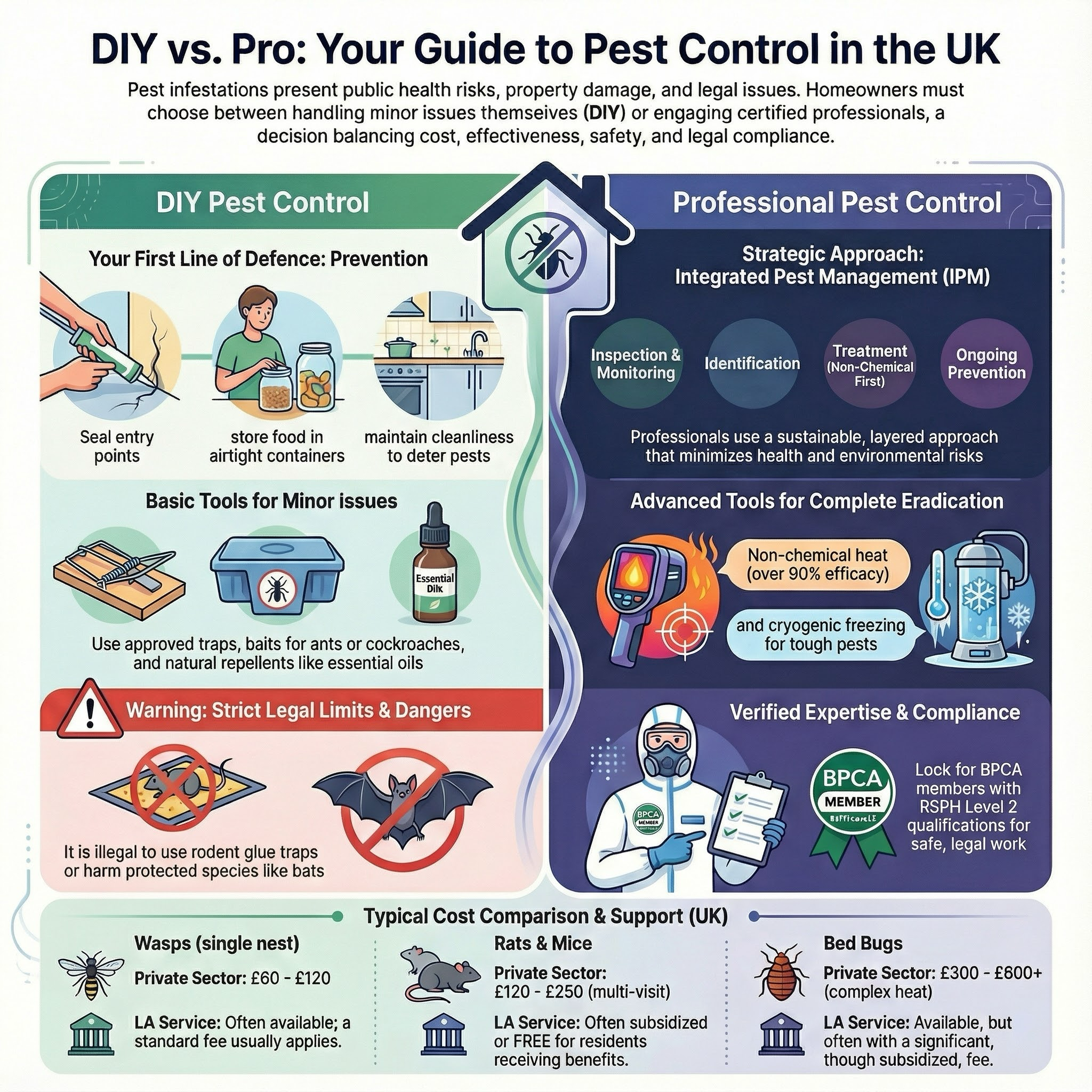
Pest Control explained
Effective rat extermination isn't just about laying traps; it is a systematic process of identification, eradication, and future-proofing. This guide outlines what to expect when hiring a professional pest controller to reclaim your home.
| Item | Low £ | High £ | Notes |
|---|---|---|---|
| Standard 3-Visit Treatment | £180 | £350 | Typical for a 3-bed semi-detached home. |
| Emergency Call-Out | £90 | £160 | Initial visit outside of standard hours. |
| CCTV Drain Survey | £150 | £280 | Required if rats are entering via the sewer. |
| Proofing & Sealing | £100 | £600+ | Varies wildly based on structural repairs needed. |
| Loft Insulation Clearance | £400 | £1,200 | Removal of contaminated material and sanitisation. |
Prices vary based on your location (London and the South East carry a premium) and the severity of the infestation. Most professionals offer a fixed-price package for three visits, which is usually the minimum required to break the breeding cycle.
While DIY traps and baits are available in hardware stores, they are often ineffective for established infestations. Professional technicians have access to high-concentration rodenticides (not available to the public) and understand "bait shyness," where rats avoid new objects.
Professional intervention is highly recommended to ensure compliance with the Campaign for Responsible Rodenticide Use (CRRU), which protects UK owls and birds of prey from secondary poisoning.
Council services are often cheaper but may have longer waiting lists and limited visit times. Private companies generally offer faster response times, more thorough proofing services, and specific time slots.
Yes, provided they are used correctly. Professionals use lockable bait stations that children cannot open, and the bait often contains a bittering agent to prevent accidental ingestion.
Rat droppings are roughly the size of an olive or raisin with tapered ends. Mouse droppings are much smaller, like grains of rice. Rats also leave greasy "smear marks" along skirting boards.
It is rare but possible. Rats are excellent swimmers and can navigate U-bends. If you suspect this, a professional can install a "rat flap" or "non-return valve" in your drainage system.
For standard baiting and trapping, you do not need to leave. If the technician recommends professional fumigation (rare for rats), you may need to vacate for several hours.
This guide was written with AI assistance and is intended for general information only. Prices are estimates based on UK averages and may vary by region. Always get at least three quotes and consult a qualified professional before starting any work.
Ask follow-ups in plain English. The AI explains options, sequencing and what to ask the pest control — so you walk in informed.
Discovering a rat problem in your UK home is more than just an unpleasant surprise; it is a genuine risk to your property’s integrity and your family’s health. ...
READ GUIDE →GuideA fly infestation in a UK home is more than just a seasonal nuisance; it is a significant hygiene risk. Flies are known carriers of bacteria such as Salmonella ...
READ GUIDE →GuideDiscovering signs of rats in your home is more than just a nuisance; it is a significant health and safety risk. Rats can gnaw through electrical cables, damage...
READ GUIDE →GuideGrey squirrels are more than just a garden nuisance; they are a significant threat to the structural integrity and safety of UK homes. Once they gain access to ...
READ GUIDE →GuideDomestic Pest and Vermin Control Guide Scope of Works Inspect lofts, sub‑floors, kitchens and exterior for signs, entry points and species identification . Prod...
READ GUIDE →GuideFinding maggots in your home is a distressing experience for any UK homeowner. These larvae, typically from houseflies or blowflies, are not just unsightly; the...
READ GUIDE →