Instant
01 · Ask
Ask the AI a follow-up
Got more questions about red fire ant fumigation? Describe the bit you're unsure about — the AI explains options, sequencing and what to ask the pest control.

Red fire ant treatment — specialist insecticide for the invasive species, with multi-visit follow-up.
You've read the brief on red fire ant fumigation. Now lean on us to find the right pest control — and stay in control of the job.
Got more questions about red fire ant fumigation? Describe the bit you're unsure about — the AI explains options, sequencing and what to ask the pest control.
Costs, timelines, pitfalls and the right questions to ask before any pest control starts on red fire ant fumigation.
Itemised quotes from up to 3 local pest controls on red fire ant fumigation — so you can compare like-for-like, not lump sums.
Ready when you are
Enter your postcode and get free quotes from local pros.
Four moves that separate a smooth job from a nightmare.
If the bait is too fast-acting, the workers die before reaching the queen, leading to a rapid population rebound.
Heavy rain immediately after treatment can wash away baits; always check the forecast before booking.
Dogs digging up bait stations can lead to accidental ingestion and treatment failure.
Failing to treat a neighbour's adjoining garden often leads to re-infestation within weeks.
Indicative UK ranges and what affects price.
By job type
Quote spread is typically ± 18% — always get 3 quotes.
Pest Control quick-view
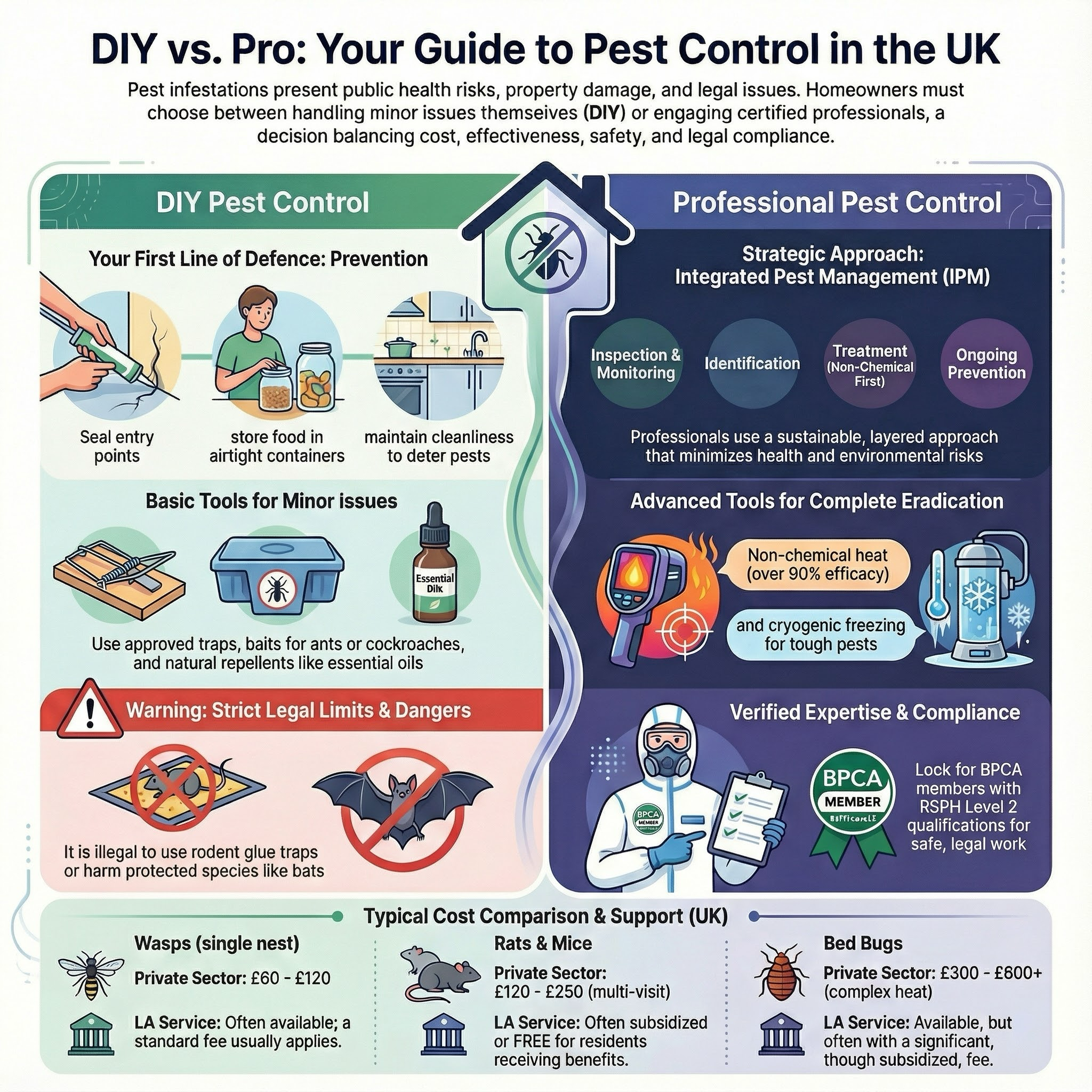
Pest Control explained
Professional eradication is essential, as standard supermarket sprays are rarely effective against a fire ant colony's complex underground structure. This guide covers the process, costs, and safety requirements for professional red fire ant treatment in the UK.
| Item | Low £ | High £ | Notes |
|---|---|---|---|
| Initial Survey & Call-out | £90 | £160 | Includes identification and treatment plan. |
| Standard Treatment (Small Garden) | £180 | £350 | Single visit with baiting and residual spray. |
| Comprehensive Package | £450 | £850 | Multiple visits, heavy baiting, and 3-month guarantee. |
| Labour (Per Hour) | £50 | £90 | For large-scale infestations or complex sites. |
| Materials & Consumables | £70 | £250 | Specialist invasive species baits and PPE. |
Prices vary based on the size of the infestation and your location in the UK, with London and the South East typically commanding higher rates. Most reputable firms include at least one follow-up visit in their initial quote to ensure the queen has been successfully neutralised.
Professional treatment is strongly recommended for red fire ants. Unlike common ants, fire ants are highly defensive; disturbing a nest without the correct equipment often leads to multiple painful stings and can cause the colony to "bud" (split into multiple new colonies).
Professional pest controllers have access to high-concentration baits and "insect growth regulators" (IGRs) that are not available to the general public. Furthermore, handling invasive species requires strict adherence to UK safety protocols to protect local biodiversity.
For most people, they cause a sharp burning sensation followed by a white pustule. However, for those with allergies, they can cause anaphylaxis, which requires immediate medical attention.
Fire ants are much more aggressive; if you disturb their mound, they will swarm upward in seconds. They also have a distinct two-segmented "waist" (pedicel) visible under a magnifying glass.
This is rarely effective. Fire ant mounds can be over a metre deep; boiling water usually only kills the surface ants, causing the queen to move deeper or relocate the colony elsewhere.
Professional baits are usually placed in tamper-resistant stations or applied in small amounts. However, pets should be kept indoors during the application and for 2–4 hours after liquid treatments have dried.
For ants, "fumigation" usually refers to targeted spraying and baiting rather than a gas "tenting." You generally only need to clear the floor area and countertops unless ants are found inside the cabinetry.
Pro Tip: If you spot a suspected fire ant mound, do not kick it or spray it with DIY aerosol. Take a photo from a safe distance and contact a BPCA-certified professional immediately to prevent the colony from spreading.
This guide was written with AI assistance and is intended for general information only. Prices are estimates based on UK averages and may vary by region. Always get at least three quotes and consult a qualified professional before starting any work.
Ask follow-ups in plain English. The AI explains options, sequencing and what to ask the pest control — so you walk in informed.
Discovering a rat problem in your UK home is more than just an unpleasant surprise; it is a genuine risk to your property’s integrity and your family’s health. ...
READ GUIDE →GuideA fly infestation in a UK home is more than just a seasonal nuisance; it is a significant hygiene risk. Flies are known carriers of bacteria such as Salmonella ...
READ GUIDE →GuideDiscovering signs of rats in your home is more than just a nuisance; it is a significant health and safety risk. Rats can gnaw through electrical cables, damage...
READ GUIDE →GuideGrey squirrels are more than just a garden nuisance; they are a significant threat to the structural integrity and safety of UK homes. Once they gain access to ...
READ GUIDE →GuideDomestic Pest and Vermin Control Guide Scope of Works Inspect lofts, sub‑floors, kitchens and exterior for signs, entry points and species identification . Prod...
READ GUIDE →GuideFinding maggots in your home is a distressing experience for any UK homeowner. These larvae, typically from houseflies or blowflies, are not just unsightly; the...
READ GUIDE →