Instant
01 · Ask
Ask the AI a follow-up
Got more questions about scabies and bed bug control? Describe the bit you're unsure about — the AI explains options, sequencing and what to ask the pest control.

Combined treatment for scabies and bed bugs — environmental spray plus medical referral for the human cases.
You've read the brief on scabies and bed bug control. Now lean on us to find the right pest control — and stay in control of the job.
Got more questions about scabies and bed bug control? Describe the bit you're unsure about — the AI explains options, sequencing and what to ask the pest control.
Costs, timelines, pitfalls and the right questions to ask before any pest control starts on scabies and bed bug control.
Itemised quotes from up to 3 local pest controls on scabies and bed bug control — so you can compare like-for-like, not lump sums.
Ready when you are
Enter your postcode and get free quotes from local pros.
Four moves that separate a smooth job from a nightmare.
If you don't declutter or wash your clothes as instructed, the treatment will likely fail as bugs find "safe zones" to hide in.
Taking pillows or clothes to a friend's house or another room during treatment can spread the infestation elsewhere.
With chemical treatments, you may still see a few bugs for a few days as they emerge from hiding and cross the treated barriers.
Bringing in second-hand furniture or "dumped" mattresses from the street is the most common way bed bugs return after a successful treatment.
Indicative UK ranges and what affects price.
By job type
Quote spread is typically ± 18% — always get 3 quotes.
Pest Control quick-view
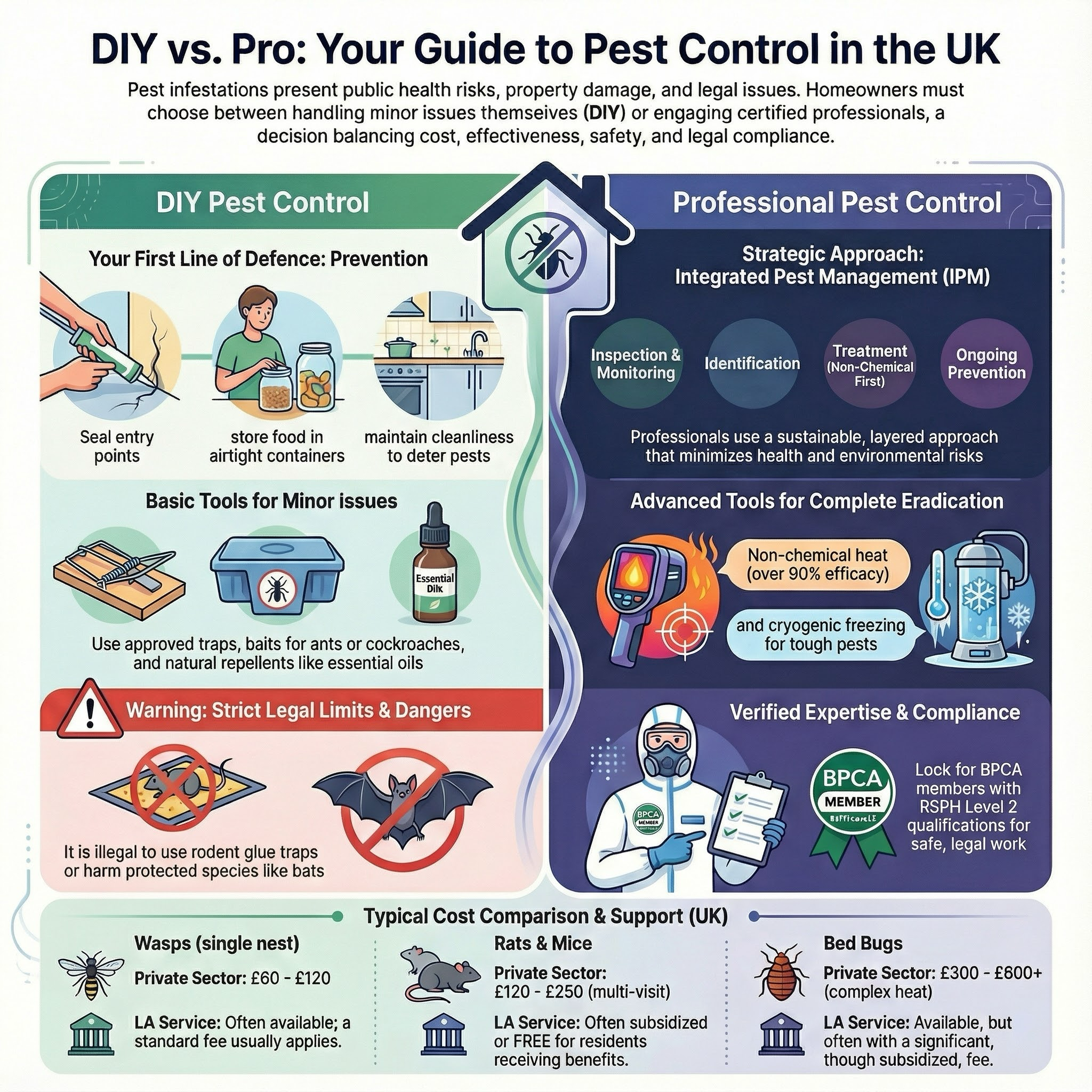
Pest Control explained
While bed bugs are hitchhikers that thrive in soft furnishings, scabies is a skin condition caused by mites. Professional pest control focuses on eliminating bed bugs from the structure of your home and providing guidance on sanitising environments affected by scabies to prevent reinfection.
The cost of pest control in the UK varies based on the severity of the infestation and the size of the property. Heat treatments are significantly more expensive than chemical sprays but offer the advantage of being "one-and-done" solutions that kill eggs instantly.
| Item | Low £ | High £ | Notes |
|---|---|---|---|
| Initial Survey/Call-out | £70 | £150 | Often deducted from the total if you book the work. |
| Chemical Treatment (per room) | £120 | £250 | Usually requires a minimum of two visits. |
| Full House Chemical (3-bed) | £350 | £650 | Includes follow-up visits and basic materials. |
| Whole House Heat Treatment | £600 | £1,800+ | Price depends on property volume and insulation. |
| Mattress Encasements | £30 | £90 | Per unit; professional-grade covers are essential. |
Prices are influenced by the level of clutter in the home, the distance the technician has to travel, and whether you require emergency weekend or evening call-outs. Always confirm if the quote includes VAT and the necessary follow-up appointments.
For bed bugs, professional treatment is almost always necessary. DIY "bug bombs" and supermarket sprays are often ineffective because they lack residual power and can actually cause the bugs to scatter further into wall cavities, making the problem worse.
Scabies is a medical condition. You must consult a GP for topical creams like Permethrin; a pest controller cannot treat your body, only provide advice on environmental cleaning.
Professional pest controllers have access to professional-use-only insecticides and high-powered steaming or heating equipment. In the UK, using certain chemicals requires specific training and certification under COSHH regulations to ensure the safety of your family and pets.
Don't simply choose the cheapest quote; an ineffective treatment is a waste of money. Look for established companies with a track record in "biting insect" control specifically.
In most cases, no. A professional treatment combined with a high-quality, certified bed bug encasement can salvage an expensive mattress. Only consider disposal if the mattress is physically damaged or the infestation is extreme.
No. For chemical sprays, you generally need to leave for 4 to 6 hours. For heat treatments, the entire property must be vacant for the duration of the day as temperatures reach levels that are unsafe for humans and pets.
Once the insecticide is completely dry, it is safe for cats and dogs. However, fish tanks must be covered or removed, and air pumps turned off, as many pest control chemicals are highly toxic to aquatic life.
Bed bugs are visible to the naked eye (like an apple pip) and leave blood spots on sheets. Scabies mites live under the skin and are invisible; they cause a characteristic "burrow" track and intense itching that worsens at night.
No. Bed bugs are not attracted to dirt; they are attracted to warmth and carbon dioxide. They are just as likely to be found in a five-star hotel as in a cluttered home, though clutter does make them harder to treat.
This guide was written with AI assistance and is intended for general information only. Prices are estimates based on UK averages and may vary by region. Always get at least three quotes and consult a qualified professional before starting any work.
Ask follow-ups in plain English. The AI explains options, sequencing and what to ask the pest control — so you walk in informed.
Discovering a rat problem in your UK home is more than just an unpleasant surprise; it is a genuine risk to your property’s integrity and your family’s health. ...
READ GUIDE →GuideA fly infestation in a UK home is more than just a seasonal nuisance; it is a significant hygiene risk. Flies are known carriers of bacteria such as Salmonella ...
READ GUIDE →GuideDiscovering signs of rats in your home is more than just a nuisance; it is a significant health and safety risk. Rats can gnaw through electrical cables, damage...
READ GUIDE →GuideGrey squirrels are more than just a garden nuisance; they are a significant threat to the structural integrity and safety of UK homes. Once they gain access to ...
READ GUIDE →GuideDomestic Pest and Vermin Control Guide Scope of Works Inspect lofts, sub‑floors, kitchens and exterior for signs, entry points and species identification . Prod...
READ GUIDE →GuideFinding maggots in your home is a distressing experience for any UK homeowner. These larvae, typically from houseflies or blowflies, are not just unsightly; the...
READ GUIDE →