Instant
01 · Ask
Ask the AI a follow-up
Got more questions about spider control? Describe the bit you're unsure about — the AI explains options, sequencing and what to ask the pest control.

Spider infestation — chemical spray with focus on entry points, lofts and outbuildings.
You've read the brief on spider control. Now lean on us to find the right pest control — and stay in control of the job.
Got more questions about spider control? Describe the bit you're unsure about — the AI explains options, sequencing and what to ask the pest control.
Costs, timelines, pitfalls and the right questions to ask before any pest control starts on spider control.
Itemised quotes from up to 3 local pest controls on spider control — so you can compare like-for-like, not lump sums.
Ready when you are
Enter your postcode and get free quotes from local pros.
Four moves that separate a smooth job from a nightmare.
Treating a living room while ignoring a heavily infested loft often leads to a "re-invasion" within weeks.
Failing to seal gaps around waste pipes or under doors means new spiders will simply replace the old ones.
High humidity attracts the insects that spiders prey on; failing to address damp can keep the spider population high.
Many spider treatments are highly toxic to aquatic life; failing to cover or move tanks is a common and costly mistake.
Indicative UK ranges and what affects price.
By job type
Quote spread is typically ± 18% — always get 3 quotes.
Pest Control quick-view
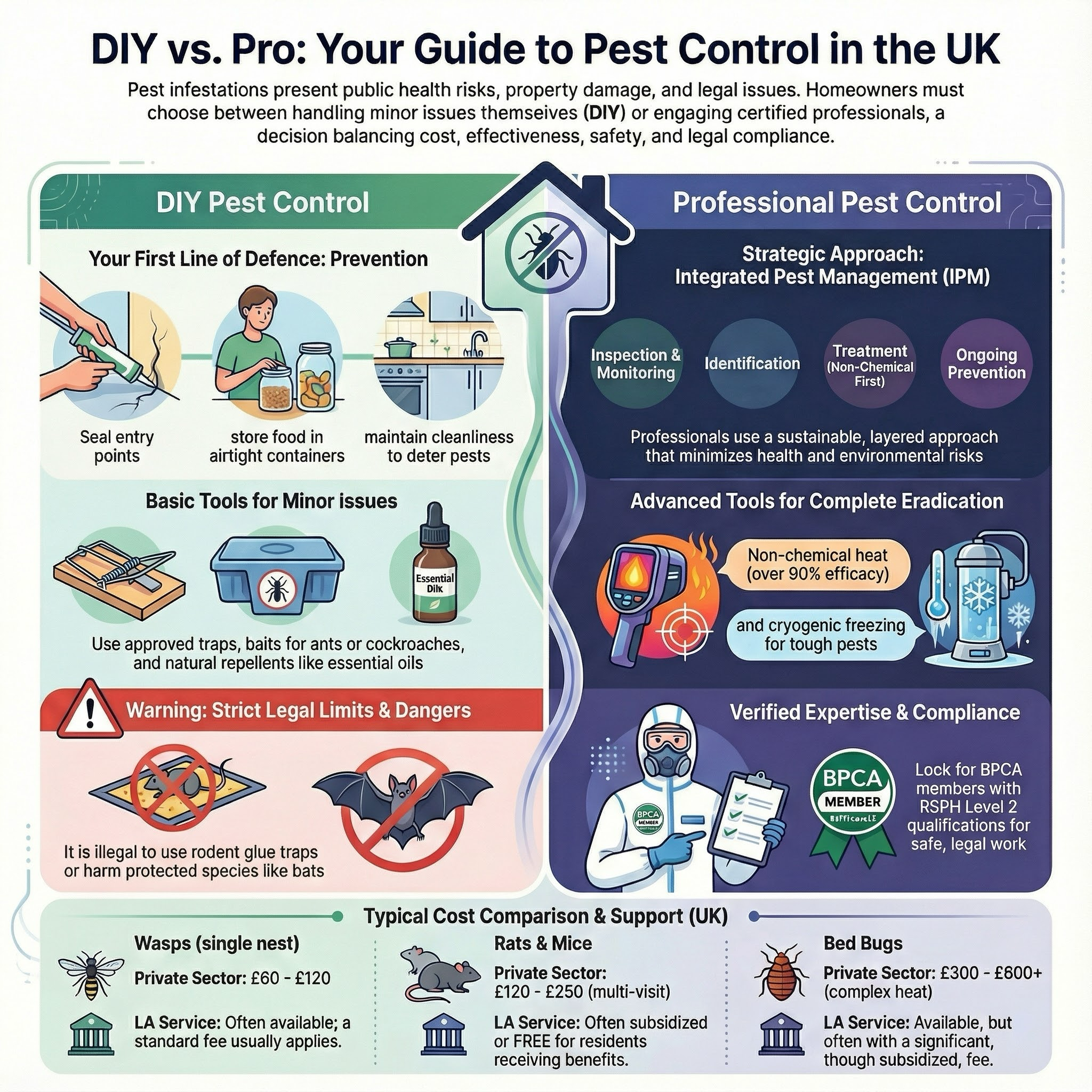
Pest Control explained
Whether you are dealing with a seasonal influx of common house spiders or are concerned about the spread of Noble False Widows, a professional pest controller provides the expertise and equipment needed to tackle the problem safely and effectively.
The cost of spider control in the UK depends largely on the size of your property and the extent of the infestation. Most residential jobs are completed in a single visit, though severe cases may require a follow-up.
| Item | Low £ | High £ | Notes |
|---|---|---|---|
| Standard 3-Bed Semi Treatment | £120 | £250 | Includes inspection and internal residual spray. |
| Full Internal & External Proofing | £200 | £450 | Includes sealing gaps and treating external eaves. | Loft or Cellar Fogging | £90 | £150 | Often an add-on to a standard visit. |
| Emergency Call-out Fee | £70 | £120 | Covers travel and initial assessment. |
Prices typically include VAT and materials. Costs may rise if the technician needs specialist access equipment, such as long-reach ladders or scaffolding, to reach high exterior soffits and fascias.
For a few wandering spiders, DIY methods like peppermint oil sprays or off-the-shelf "spider stop" aerosols are often sufficient. However, if you have a recurring problem or find numerous egg sacs, professional intervention is recommended.
Professional pest controllers have access to residual insecticides that remain effective for months, whereas supermarket products often only kill on contact.
If you suspect a "False Widow" infestation, professional help is safer. While their bite is rarely dangerous to healthy adults, a professional can ensure they are removed without risk to children or pets.
Questions to ask:
Once dry, most modern residual sprays are safe for cats and dogs. However, they are often highly toxic to fish and reptiles, so tanks and enclosures must be sealed or moved before work begins.
No treatment can offer 100% permanent protection, as spiders can enter through the smallest cracks. However, professional proofing and residual sprays significantly reduce the population for several months.
Yes, it helps to vacuum thoroughly and move furniture away from the walls. This allows the technician to apply treatments directly to the skirting boards and corners where spiders travel.
False Widows are usually dark brown with a bulbous abdomen and cream-coloured markings. They prefer dark, undisturbed corners like window frames or sheds; a professional can provide a definitive identification.
It is usually best to leave the webs in place. This helps the technician identify the species and the "hotspots" of activity, allowing for a more targeted treatment.
This guide was written with AI assistance and is intended for general information only. Prices are estimates based on UK averages and may vary by region. Always get at least three quotes and consult a qualified professional before starting any work.
Ask follow-ups in plain English. The AI explains options, sequencing and what to ask the pest control — so you walk in informed.
Discovering a rat problem in your UK home is more than just an unpleasant surprise; it is a genuine risk to your property’s integrity and your family’s health. ...
READ GUIDE →GuideA fly infestation in a UK home is more than just a seasonal nuisance; it is a significant hygiene risk. Flies are known carriers of bacteria such as Salmonella ...
READ GUIDE →GuideDiscovering signs of rats in your home is more than just a nuisance; it is a significant health and safety risk. Rats can gnaw through electrical cables, damage...
READ GUIDE →GuideGrey squirrels are more than just a garden nuisance; they are a significant threat to the structural integrity and safety of UK homes. Once they gain access to ...
READ GUIDE →GuideDomestic Pest and Vermin Control Guide Scope of Works Inspect lofts, sub‑floors, kitchens and exterior for signs, entry points and species identification . Prod...
READ GUIDE →GuideFinding maggots in your home is a distressing experience for any UK homeowner. These larvae, typically from houseflies or blowflies, are not just unsightly; the...
READ GUIDE →