Instant
01 · Ask
Ask the AI a follow-up
Got more questions about spider removal? Describe the bit you're unsure about — the AI explains options, sequencing and what to ask the pest control.

Spider removal and treatment — chemical spray plus entry-point identification and sealing.
You've read the brief on spider removal. Now lean on us to find the right pest control — and stay in control of the job.
Got more questions about spider removal? Describe the bit you're unsure about — the AI explains options, sequencing and what to ask the pest control.
Costs, timelines, pitfalls and the right questions to ask before any pest control starts on spider removal.
Itemised quotes from up to 3 local pest controls on spider removal — so you can compare like-for-like, not lump sums.
Ready when you are
Enter your postcode and get free quotes from local pros.
Four moves that separate a smooth job from a nightmare.
Spiders go where the food is. If you have an influx of spiders, you likely have an underlying fly or moth problem that also needs addressing.
Spiders often hide in wall cavities or behind fitted wardrobes where standard sprays cannot reach; fogging may be required.
Removing webs immediately after treatment can sometimes reduce the effectiveness of residual chemicals; follow the technician's advice on when to clean.
External treatments applied just before heavy rain may wash away, requiring a re-application.
Indicative UK ranges and what affects price.
By job type
Quote spread is typically ± 18% — always get 3 quotes.
Pest Control quick-view
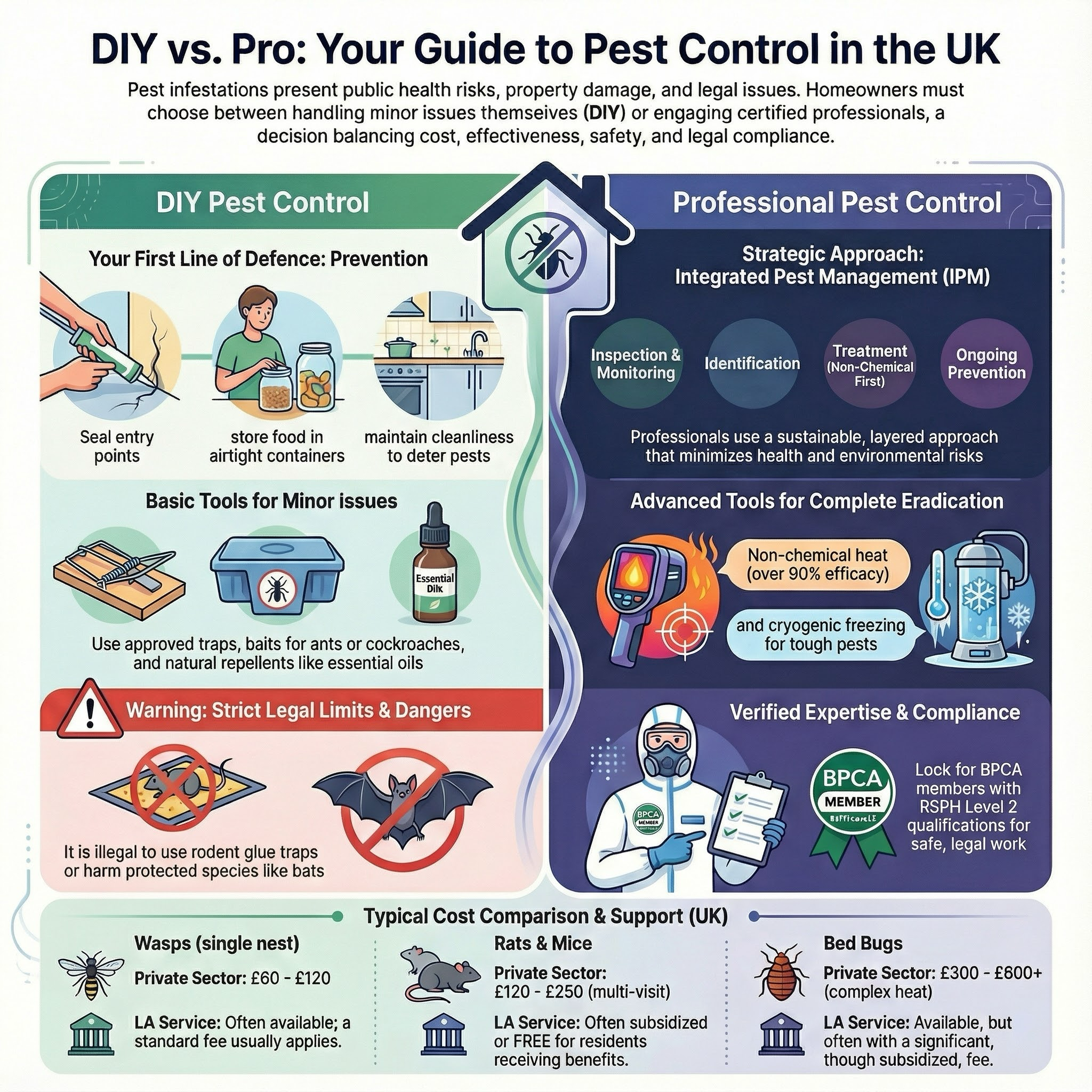
Pest Control explained
For those with arachnophobia or properties prone to heavy infestations—particularly in damp areas or older buildings—engaging a professional ensures that the "harbourage" sites in lofts, eaves, and wall cavities are properly addressed. This guide covers what to expect when hiring a UK pest control expert to secure your home.
| Item | Low £ | High £ | Notes |
|---|---|---|---|
| Standard Call-out & Inspection | £60 | £120 | Includes initial assessment and identification. |
| Single Room/Area Treatment | £80 | £150 | Targeted treatment for a specific problem area. |
| Full House Treatment (3-Bed) | £150 | £350 | Internal and external perimeter treatment. |
| Loft or Outbuilding Fogging | £100 | £200 | Ulv (Ultra Low Volume) misting for large voids. |
| Specialist Access (Scaffolding/Cherry Picker) | £250 | £600 | Required for high eaves or apartment blocks. |
Prices vary based on your location in the UK (London and the South East typically command higher rates) and the severity of the infestation. Most domestic jobs are completed in a single visit, though heavy infestations may require a follow-up treatment at a reduced rate.
Removing the occasional house spider with a vacuum or glass is a simple DIY task. However, if you are dealing with a recurring "infestation" or suspected False Widows, professional help is safer and more effective. Professionals have access to residual insecticides not available to the public, which continue to work for weeks after application.
Professional treatments don't just kill the spiders you see; they create a chemical barrier that prevents new spiders from settling in the same spots.
While they are the most "venomous" spiders in the UK, their bite is typically no worse than a wasp sting. However, they can cause allergic reactions in some people, and professional removal is recommended if they are found in bedrooms or nurseries.
Modern professional pesticides are very safe once dry. You will be asked to keep pets (especially cats and fish) out of the room during application and for a few hours afterwards. Fish tanks must be covered and pumps turned off as many treatments are toxic to aquatic life.
There is no scientific evidence that conkers repel spiders. Peppermint oil can act as a mild deterrent, but it does not kill spiders or remove egg sacs, making it ineffective for an established infestation.
They usually enter through gaps under doors, around windows, or through air bricks. They are also frequently brought in on laundry, firewood, or inside delivery boxes.
No treatment is permanent. Residual sprays usually last 2–3 months. Long-term control requires "proofing" your home by sealing cracks and reducing outdoor lighting that attracts the insects spiders feed on.
This guide was written with AI assistance and is intended for general information only. Prices are estimates based on UK averages and may vary by region. Always get at least three quotes and consult a qualified professional before starting any work.
Ask follow-ups in plain English. The AI explains options, sequencing and what to ask the pest control — so you walk in informed.
Discovering a rat problem in your UK home is more than just an unpleasant surprise; it is a genuine risk to your property’s integrity and your family’s health. ...
READ GUIDE →GuideA fly infestation in a UK home is more than just a seasonal nuisance; it is a significant hygiene risk. Flies are known carriers of bacteria such as Salmonella ...
READ GUIDE →GuideDiscovering signs of rats in your home is more than just a nuisance; it is a significant health and safety risk. Rats can gnaw through electrical cables, damage...
READ GUIDE →GuideGrey squirrels are more than just a garden nuisance; they are a significant threat to the structural integrity and safety of UK homes. Once they gain access to ...
READ GUIDE →GuideDomestic Pest and Vermin Control Guide Scope of Works Inspect lofts, sub‑floors, kitchens and exterior for signs, entry points and species identification . Prod...
READ GUIDE →GuideFinding maggots in your home is a distressing experience for any UK homeowner. These larvae, typically from houseflies or blowflies, are not just unsightly; the...
READ GUIDE →