Instant
01 · Ask
Ask the AI a follow-up
Got more questions about wasp nest removal? Describe the bit you're unsure about — the AI explains options, sequencing and what to ask the pest control.

Same-day wasp nest treatment — chemical dust or spray, nest destroyed in one visit.
You've read the brief on wasp nest removal. Now lean on us to find the right pest control — and stay in control of the job.
Got more questions about wasp nest removal? Describe the bit you're unsure about — the AI explains options, sequencing and what to ask the pest control.
Costs, timelines, pitfalls and the right questions to ask before any pest control starts on wasp nest removal.
Itemised quotes from up to 3 local pest controls on wasp nest removal — so you can compare like-for-like, not lump sums.
Ready when you are
Enter your postcode and get free quotes from local pros.
Four moves that separate a smooth job from a nightmare.
Homeowners often seal the entry hole before the wasps are dead, forcing the insects to find a new way out—often into the house.
Treating a bee nest can lead to legal issues and ecological harm; always get a professional ID first.
DIY sprays often only kill the surface wasps, leaving the queen alive to continue producing larvae.
Forgetting to keep windows closed for 24 hours after treatment can lead to disoriented, angry wasps entering the home.
Indicative UK ranges and what affects price.
By job type
Quote spread is typically ± 18% — always get 3 quotes.
Pest Control quick-view
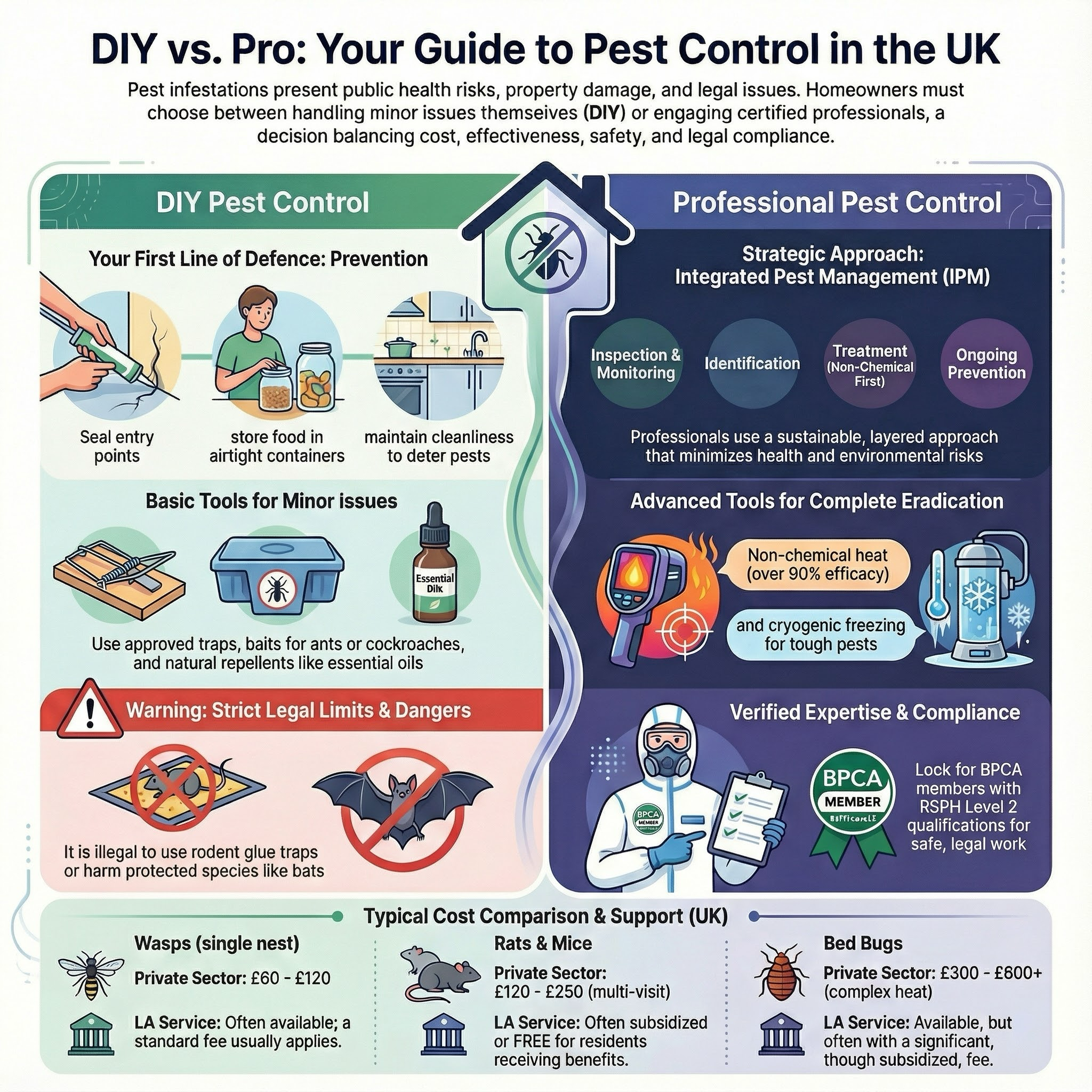
Pest Control explained
Professional wasp nest removal ensures the colony is neutralised safely using specialist equipment and professional-grade insecticides. This guide covers everything you need to know about the process, costs, and safety requirements for UK properties in 2025.
| Item | Low £ | High £ | Notes |
|---|---|---|---|
| Standard Nest Treatment | £75 | £110 | Ground level or easy ladder access. |
| Additional Nest | £25 | £50 | Discounted rate when treated during the same visit. |
| High-Level Access | £150 | £450 | Requires scaffolding or a cherry picker for high roofs. |
| Emergency/Weekend Call-out | £120 | £180 | Out-of-hours service for urgent safety risks. |
| Loft Space Treatment | £90 | £130 | Includes PPE and crawl space safety protocols. |
Prices generally include the call-out fee, professional-grade chemicals, and a guarantee. Total costs are primarily influenced by the height of the nest and the number of colonies present on the property.
While DIY "wasp foam" is available in hardware stores, professional removal is strongly recommended for safety and efficacy. Professionals use long-reach lances that allow them to treat nests from a safe distance, and their protective suits are far more robust than standard clothing.
Warning: Never attempt to treat a nest if you have a known allergy to stings. Anaphylactic shock can be fatal, and a disturbed nest will trigger a swarm response.
In the UK, professionals have access to higher-concentration insecticides regulated under COSHH (Control of Substances Hazardous to Health). These are significantly more effective than domestic products, often resolving the issue in a single visit.
It isn't strictly necessary. Wasps never reuse an old nest; they build a fresh one every year. However, removing it prevents other pests (like carpet beetles) from feeding on the remains.
Once the insecticide has dried or settled (usually after a few hours), it poses minimal risk. Your technician will advise you to keep pets indoors and away from the treated area for a specific timeframe.
Hornet nests are typically larger and the insects themselves are bigger with orange/brown markings. While hornets are generally less aggressive, their stings are more painful and require the same professional approach.
While they won't use the old nest, if your property has ideal conditions (like a specific gap in the eaves), a new queen may choose the same location. Sealing entry points after treatment is the best prevention.
Even a "golf ball" sized nest in early spring contains a queen and several workers. It is never advisable to move a nest manually without professional protective gear and neutralising agents.
This guide was written with AI assistance and is intended for general information only. Prices are estimates based on UK averages and may vary by region. Always get at least three quotes and consult a qualified professional before starting any work.
Ask follow-ups in plain English. The AI explains options, sequencing and what to ask the pest control — so you walk in informed.
Discovering a rat problem in your UK home is more than just an unpleasant surprise; it is a genuine risk to your property’s integrity and your family’s health. ...
READ GUIDE →GuideA fly infestation in a UK home is more than just a seasonal nuisance; it is a significant hygiene risk. Flies are known carriers of bacteria such as Salmonella ...
READ GUIDE →GuideDiscovering signs of rats in your home is more than just a nuisance; it is a significant health and safety risk. Rats can gnaw through electrical cables, damage...
READ GUIDE →GuideGrey squirrels are more than just a garden nuisance; they are a significant threat to the structural integrity and safety of UK homes. Once they gain access to ...
READ GUIDE →GuideDomestic Pest and Vermin Control Guide Scope of Works Inspect lofts, sub‑floors, kitchens and exterior for signs, entry points and species identification . Prod...
READ GUIDE →GuideFinding maggots in your home is a distressing experience for any UK homeowner. These larvae, typically from houseflies or blowflies, are not just unsightly; the...
READ GUIDE →