Instant
01 · Ask
Ask the AI a follow-up
Got more questions about wildlife Removal? Describe the bit you're unsure about — the AI explains options, sequencing and what to ask the pest control.

Squirrels, badgers, foxes or birds — removed humanely and legally. Some species protected under Wildlife & Countryside Act.
You've read the brief on wildlife Removal. Now lean on us to find the right pest control — and stay in control of the job.
Got more questions about wildlife Removal? Describe the bit you're unsure about — the AI explains options, sequencing and what to ask the pest control.
Costs, timelines, pitfalls and the right questions to ask before any pest control starts on wildlife Removal.
Itemised quotes from up to 3 local pest controls on wildlife Removal — so you can compare like-for-like, not lump sums.
Ready when you are
Enter your postcode and get free quotes from local pros.
Four moves that separate a smooth job from a nightmare.
Sealing a hole while the animal is still inside leads to it dying in your walls, causing horrific smells and fly infestations.
Moving a "pest" animal and releasing it elsewhere is often illegal and usually results in the animal dying or becoming someone else's problem.
Leaving droppings or nesting material in a loft can attract secondary pests like carpet beetles, moths, and rats.
Squirrels and rats can chew through thin chicken wire in minutes; only heavy-gauge galvanised steel should be used.
Indicative UK ranges and what affects price.
By job type
Quote spread is typically ± 18% — always get 3 quotes.
Pest Control quick-view
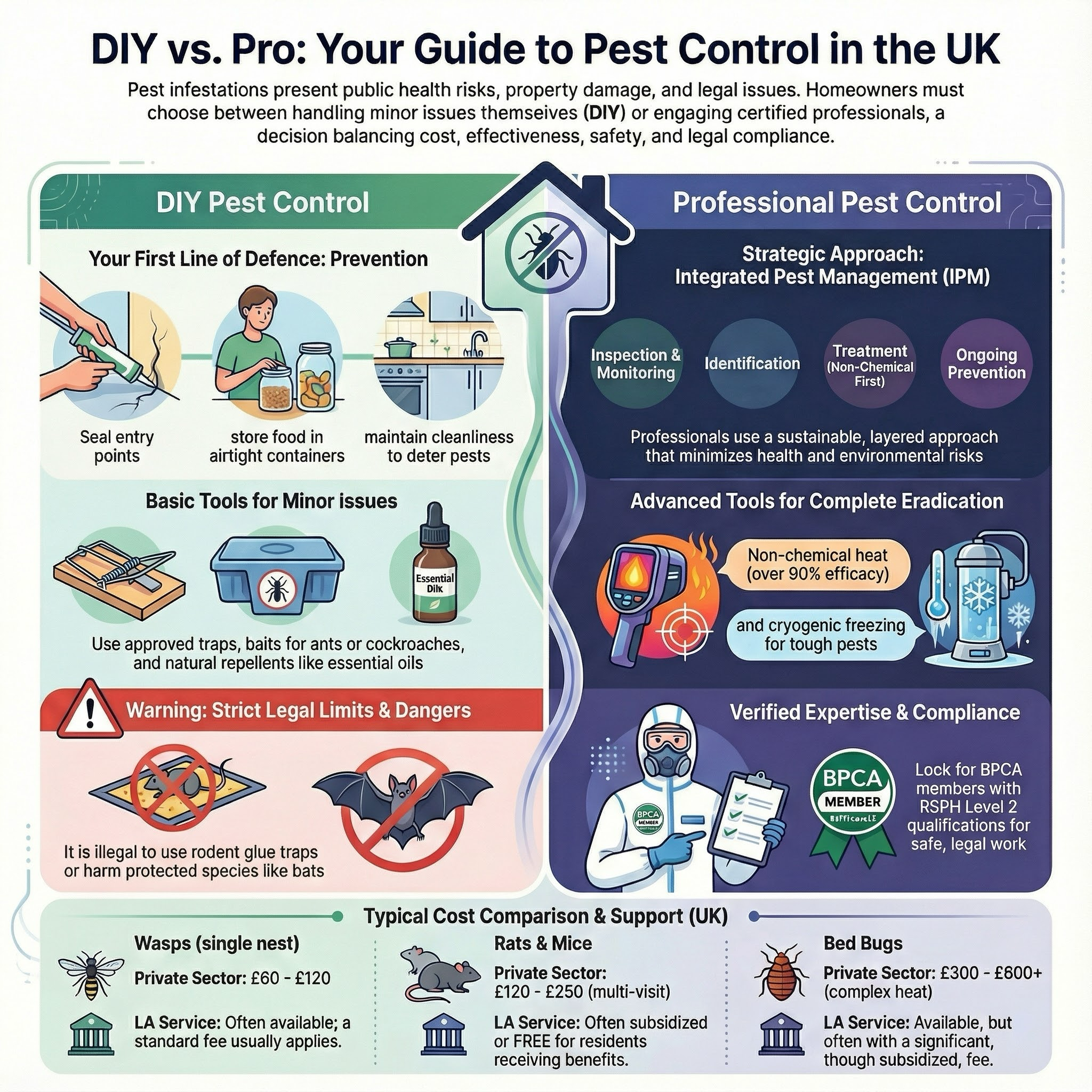
Pest Control explained
Professional wildlife removal isn't just about catching an animal; it involves navigating complex UK environmental laws while ensuring your home is hygienically restored and permanently "proofed" against future invasions. This guide outlines what to expect when hiring a specialist to reclaim your property.
Wildlife removal costs vary significantly based on the species involved and the height of the access required. Prices generally include a call-out fee plus labour and materials for proofing.
| Service Item | Low £ | High £ | Notes |
|---|---|---|---|
| Initial Inspection/Call-out | £70 | £130 | Often deducted from the final bill if work proceeds. |
| Grey Squirrel Removal (3 visits) | £180 | £350 | Includes trapping and basic entry point sealing. |
| Bird Proofing (Solar Panels) | £450 | £1,200 | Includes mesh around the perimeter of the array. |
| Fox Deterrence Package | £200 | £550 | Includes scent marking and physical barrier installation. | £150 | £400 | Includes specialist PPE and hazardous waste disposal. |
| Access Equipment (Scaffold/Boom) | £300 | £800 | Required for high rooflines or chimney work. |
Prices are influenced by your location (London and the South East typically command a 20% premium) and the time of year. Emergency weekend call-outs for trapped animals will usually double the standard inspection fee.
While DIY deterrents like ultrasonic devices are available, they are rarely effective against established nests. Handling wildlife carries significant health risks, including Leptospirosis and Psittacosis from droppings.
Crucial Legal Note: In the UK, it is an offence to release a trapped grey squirrel back into the wild; they must be humanely dispatched. Most homeowners find this process distressing and legally complex, making a professional service essential.
Furthermore, interfering with protected species like bats without a licence can result in unlimited fines or prison sentences. Professionals have the training to identify these species before any work begins.
No. All bat species and their roosts are fully protected by law, even if the bats aren't currently present. You must contact the National Bat Helpline or a licenced ecologist before doing any work in the loft.
Most professionals focus on "deterrence" and "proofing" (e.g., fixing fences) rather than removal. Relocating foxes is considered inhumane as they are territorial, and a new fox will usually move into the empty territory within days.
The cost is driven by access and material quality. Working on rooflines often requires scaffolding or specialist cherry pickers, and the stainless steel spikes or UV-stabilised netting used must withstand decades of UK weather.
Most standard UK home insurance policies exclude damage caused by "vermin" or "gradual deterioration." However, some may cover damage to wiring if it poses a fire risk—check your specific policy wording.
Yes, grey squirrels are an invasive species and can be legally controlled. However, red squirrels are strictly protected, and it is vital to be 100% certain of the species before taking action.
This guide was written with AI assistance and is intended for general information only. Prices are estimates based on UK averages and may vary by region. Always get at least three quotes and consult a qualified professional before starting any work.
Ask follow-ups in plain English. The AI explains options, sequencing and what to ask the pest control — so you walk in informed.
Discovering a rat problem in your UK home is more than just an unpleasant surprise; it is a genuine risk to your property’s integrity and your family’s health. ...
READ GUIDE →GuideA fly infestation in a UK home is more than just a seasonal nuisance; it is a significant hygiene risk. Flies are known carriers of bacteria such as Salmonella ...
READ GUIDE →GuideDiscovering signs of rats in your home is more than just a nuisance; it is a significant health and safety risk. Rats can gnaw through electrical cables, damage...
READ GUIDE →GuideGrey squirrels are more than just a garden nuisance; they are a significant threat to the structural integrity and safety of UK homes. Once they gain access to ...
READ GUIDE →GuideDomestic Pest and Vermin Control Guide Scope of Works Inspect lofts, sub‑floors, kitchens and exterior for signs, entry points and species identification . Prod...
READ GUIDE →GuideFinding maggots in your home is a distressing experience for any UK homeowner. These larvae, typically from houseflies or blowflies, are not just unsightly; the...
READ GUIDE →